10 Best Products for Commercial Renovations Worldwide
Commercial renovations demand more than attractive finishes. They require products that survive daily traffic, changing regulations, and demanding maintenance schedules. This guide examines ten practical products used in commercial renovation projects worldwide. It focuses on performance, installation value, and long-term reliability.
The selection includes low-VOC paints, modular flooring, acoustic panels, energy-efficient lighting, durable hardware, and water-saving fixtures. Each product can solve a visible problem. A hotel corridor may need scratch-resistant flooring. A busy clinic may need seamless, cleanable wall surfaces. An open office may need acoustic control near glass meeting rooms. These examples reflect real project decisions, not showroom appeal.
Product quality is only one part of the result. Substrate conditions, installer skill, climate, and aftercare can change performance dramatically. A premium sealant may fail on a poorly prepared joint. That detail is easy to miss. We compare technical specifications, maintenance demands, expected service life, and supplier support where reliable information is available. Independent certifications and manufacturer documentation also matter, especially across different markets.
Still, no global list can fit every building. Local standards, budgets, labor availability, and design traditions deserve careful review. Some recommendations may look less exciting than decorative alternatives. They may prove more dependable. We also acknowledge a practical limitation: product claims do not always match field experience. For that reason, this overview encourages sample testing, professional consultation, and honest post-installation evaluation before major purchasing decisions. Good renovations are rarely perfect. They are considered, measurable, and adaptable.
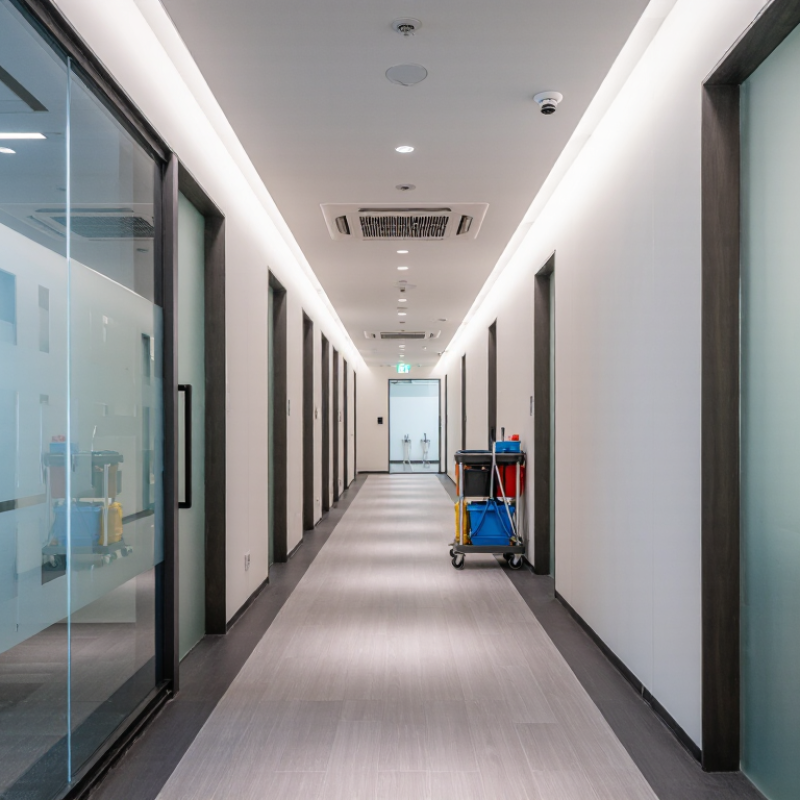
Commercial Renovation Needs and Product Selection Criteria
Commercial Renovation Needs and Product Selection Criteria
Commercial renovation products must survive daily traffic, cleaning chemicals, changing tenants, and tight installation schedules. The best choices are not always the most expensive. They should combine verified durability, easy maintenance, low emissions, and reliable replacement access. On renovation sites, installers often discover that a beautiful product becomes a liability when its parts are difficult to repair.
Energy performance deserves careful attention. The 2023 Global Status Report for Buildings and Construction reported that buildings and construction produced about 37% of global energy-related emissions in 2022. Efficient lighting, smart controls, insulated glazing, and high-performance HVAC equipment can reduce operating pressure. However, projected savings need independent testing. A promising specification is not proof.
Indoor conditions matter too. The United States Environmental Protection Agency reports that indoor pollutant levels can be two to five times higher than outdoor levels, and sometimes much higher. Low-VOC coatings, moisture-resistant surfaces, acoustic products, and filtered ventilation support healthier workplaces. Product documentation should show emissions testing, fire performance, cleaning limits, warranty terms, and lifecycle data. It should also identify responsible installers.
Budget decisions need reflection. A cheaper floor may require earlier replacement. A premium system may be wasteful in a lightly used office. The right selection depends on occupancy, climate, maintenance skills, accessibility, and future layout changes. That sounds obvious. It is often missed. Procurement teams should compare whole-life cost, not only the first invoice. Triangulating manufacturer data with independent certifications and facility-manager feedback creates a more dependable shortlist.
Structural and Surface Materials for High-Traffic Spaces
10 Best Products for Commercial Renovations Worldwide
Structural and Surface Materials for High-Traffic Spaces
High-traffic interiors need strength, repairability, and controlled maintenance.
The ten strongest choices are low-carbon concrete, recycled steel, engineered timber, porcelain tile, terrazzo, rubber flooring, commercial vinyl, compact laminate, fiber-cement panels, and low-VOC protective coatings. Each product must match its location. Recycled steel suits long spans and heavy frames. Engineered timber can reduce structural weight, but moisture detailing remains critical. Porcelain and terrazzo handle rolling loads, wet cleaning, and repeated footfall. Rubber flooring improves grip near entrances, while commercial vinyl supports quick replacement in busy corridors.
Energy performance also matters. The International Energy Agency’s 2023 Global Status Report found that buildings consumed about 30% of global final energy in 2022 and produced roughly 26% of energy-related emissions. Material selection should therefore consider insulation, embodied carbon, and service life.
The U.S. Environmental Protection Agency notes that indoor pollutant levels can be two to five times higher than outdoor levels, making low-VOC coatings and adhesives valuable in occupied renovations. Specify documented emissions data, recycled content, fire ratings, and slip resistance. Ask for lifecycle evidence, not attractive claims.
Durability is not automatic.
I have seen premium surfaces fail because joints were poorly detailed or cleaning chemicals were misused. That weakness deserves attention. A replaceable wear layer may outperform a supposedly permanent finish. Maintenance teams should test samples under carts, grit, water, and harsh lighting before approving a global specification.
Energy-Efficient Lighting, HVAC, and Electrical Products
10 Best Products for Commercial Renovations Worldwide
Energy-Efficient Lighting, HVAC, and Electrical Products
Commercial renovations perform better when energy products work as one system. In my renovation experience, the best results began with an accurate load assessment, not a product catalogue. LED panel fixtures provide steady illumination with lower heat output. Occupancy sensors reduce lighting use in empty meeting rooms. Daylight controls adjust brightness near windows. Emergency lighting supports safe movement during power interruptions.
Heat-pump systems can provide efficient heating and cooling across many climates. Variable-speed drives help fans and pumps match real building demand. Smart thermostats improve zone control, although poor placement can distort readings. Energy recovery ventilators exchange stale indoor air while limiting heat loss. High-efficiency boilers remain useful where hydronic heating already exists. Their performance depends heavily on correct sizing and regular maintenance.
Electrical renovations also benefit from advanced switchgear, power meters, and surge protection devices. These products improve monitoring and help protect sensitive equipment. A practical package may include LED fixtures, occupancy sensors, daylight controls, heat pumps, variable-speed drives, smart thermostats, energy recovery ventilators, high-efficiency boilers, smart meters, and surge protection. Professional commissioning should verify airflow, lighting levels, voltage, and control sequences. Small errors matter.
One mistake is assuming the most efficient product always delivers the greatest savings. Construction limits, user habits, climate, and maintenance budgets can change the outcome. Independent testing data and applicable local standards deserve careful review. Better equipment cannot repair an oversized system or careless installation. Yet measured performance can reveal problems early, before wasted energy becomes a permanent operating cost.
Sustainable Finishes and Maintenance Products for Global Projects
Commercial renovation demands finishes that survive heavy traffic, frequent cleaning, and changing climates. Sustainable choices begin with the whole service life, not a green label. I look for low-emission coatings, recycled-content surfaces, and repairable flooring systems. Material data should show emissions, durability tests, and disposal guidance. Vague claims create costly mistakes. Good specifications define performance limits, curing times, and approved cleaning methods.
In humid coastal projects, moisture-resistant mineral finishes can reduce peeling and repeated repairs. In busy corridors, textured resilient flooring can improve grip while hiding small scuffs. Water-based sealers usually reduce indoor odors, but ventilation remains essential during installation. Maintenance teams need simple instructions, dilution ratios, and safe storage details. A finish is only sustainable when staff can maintain it correctly. That sounds obvious. It is often missed.
Global teams should test samples under local light, humidity, and cleaning routines before approval. A surface that works in a dry office may fail near a tropical entrance. I recommend recording batch details, inspection dates, and repair history for every site. Independent test reports strengthen procurement decisions and support responsible claims. Yet performance is never perfectly predictable. Site workmanship, supply delays, and user behavior can change results. We should leave room to revise specifications after real use.
10 Best Products for Commercial Renovations Worldwide
Sustainable finishes and maintenance products selected for durability, lower-emission installation, repairability, and suitability for high-traffic commercial projects. The chart shows common planning service-life ranges in years; actual performance depends on traffic, substrate preparation, climate, cleaning routines, and installation quality.