Why Choose China Prefabricated Buildings for Your Next Project?
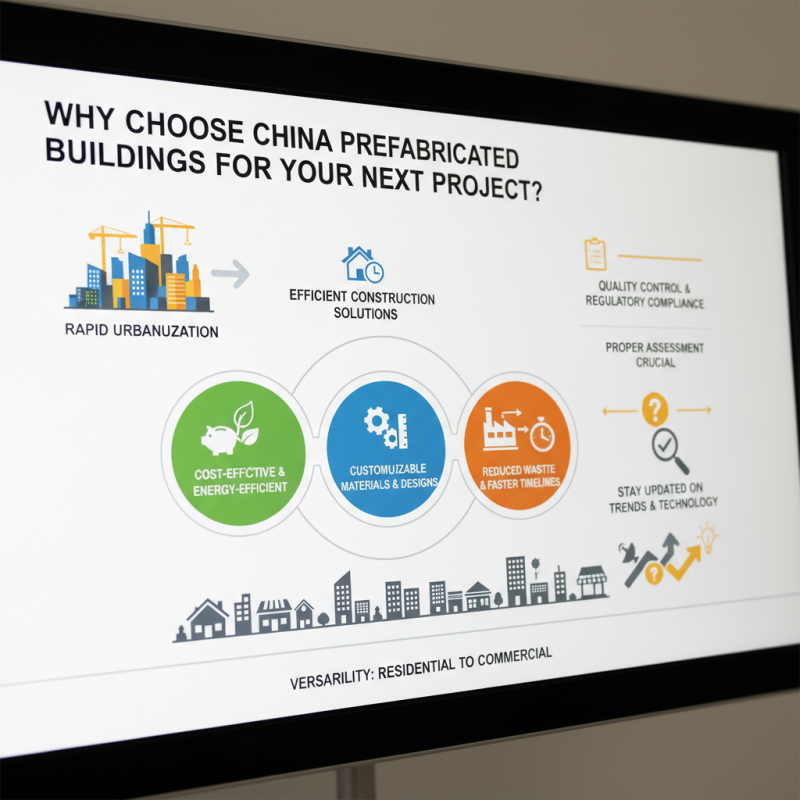
The China Prefabricated Buildings Market has been gaining significant attention in recent years. With rapid urbanization, there is a growing demand for efficient construction solutions. Prefabricated buildings offer a way to address housing shortages swiftly and effectively. They are manufactured off-site, which reduces wastage and speeds up project timelines.
Investing in China’s prefabricated buildings can be a game-changer for developers. These structures are not only cost-effective but also energy-efficient. Builders can customize materials and designs to suit various needs. However, challenges remain in quality control and local regulatory compliance. Proper assessment of these factors is crucial for successful project execution.
The versatility of prefabricated structures serves diverse sectors, from residential to commercial projects. As the market evolves, staying updated on trends and technology is essential. Overall, the benefits of prefabricated buildings make them an attractive option for your next project in a dynamic construction landscape.
Benefits of Prefabricated Buildings in China
Prefabricated buildings in China have gained immense popularity due to their numerous benefits. A study by the China Academy of Building Research reveals that prefabricated construction can reduce project timelines by up to 50%. These structures are built off-site, allowing for better quality control and efficient resource management. As a result, the construction process becomes quicker, alleviating the burden of delays.
Additionally, prefabricated buildings are often more sustainable than traditional methods. According to a report by the International Energy Agency, such buildings can reduce energy consumption by 20% to 40%. They utilize less material waste, which is critical in the modern landscape where environmental concerns are paramount. However, not all projects may fully embrace prefabrication; challenges include the need for skilled labor and technological advancements in some areas.
Cost-effectiveness is another significant factor. Research indicates that prefabricated projects can save up to 15% on overall costs. Nevertheless, companies should consider the initial investment in technology, which can be substantial. Adopting prefabricated building methods requires careful planning and an understanding of their limitations.
Key Factors Driving the Growth of Prefabricated Construction
Prefabricated construction is gaining traction in China, driven by various key factors. The growing urban population requires rapid housing solutions. Prefabricated buildings can be assembled faster than traditional methods, which significantly expedites project timelines. This capability allows cities to address urgent housing needs efficiently.
Cost efficiency is another critical factor. Prefabricated components are produced in controlled environments, reducing material wastage. This approach not only saves money but also minimizes on-site labor requirements. However, challenges remain in ensuring quality control throughout the manufacturing process. Construction teams must remain vigilant to maintain high standards.
Sustainability is becoming essential in the construction industry. Prefabricated buildings often use eco-friendly materials and techniques. This trend aligns with global efforts to reduce carbon footprints. Despite these advancements, some argue that prefabrication could lead to a lack of personalization in design. Striking a balance between efficiency and aesthetic value is vital for future developments.
Cost Efficiency and Speed of China Prefabricated Buildings
When considering construction projects, efficiency is key. China prefabricated buildings offer an attractive solution. These structures are designed in advance and assembled on-site. This dramatically reduces construction time. A typical project can be completed in weeks, not months. This swift process is pivotal for urgent developments.
Cost efficiency is equally significant. Factory production minimizes waste and optimizes material use. The result is lower overall costs for clients. Additionally, reduced labor needs contribute to savings. However, one must be mindful of potential quality issues. Imported prefabricated goods must meet rigorous standards.
It’s essential to verify suppliers and their practices. This adds a layer of complexity but ensures reliability. Overall, the benefits of prefabricated buildings are compelling. Speed and cost savings can transform project outcomes. Yet, careful consideration is needed to navigate challenges. Making informed choices leads to successful results in construction.
Sustainability and Environmental Impact of Prefabrication
The sustainability of prefabricated buildings is becoming increasingly important. These structures use manufacturing techniques that reduce waste significantly. In traditional construction, about 30% of materials can end up as scrap. Prefabrication minimizes this waste by supplying only what is needed.
Energy efficiency is another critical factor. Prefabricated buildings can be designed for better insulation. This leads to lower energy consumption during their lifetime. As buildings account for a large percentage of global energy use, improving efficiency can yield significant environmental benefits.
However, challenges still exist. Transportation emissions can offset some sustainability advantages. When components are manufactured far from their final destination, the carbon footprint increases. It requires strategic planning to ensure that prefabrication remains a truly green solution. Thus, every decision in the process must consider both benefits and weaknesses.
Why Choose China Prefabricated Buildings for Your Next Project? - Sustainability and Environmental Impact of Prefabrication
| Dimension | Description | Impact |
| Material Efficiency | Utilization of high-strength materials reduces waste. | Minimizes raw material consumption. |
| Energy Use | Lower energy usage during production and transportation. | Reduces carbon footprint. |
| Construction Waste | Controlled factory environment minimizes on-site waste. | Leads to more sustainable building practices. |
| Recyclability | Use of recyclable materials and components. | Promotes a circular economy. |
| Time Efficiency | Faster assembly on-site due to prefabrication. | Reduces overall project timeline. |
Quality Control and Technological Advancements in Chinese Manufacturing
China's prefabricated buildings stand out due to their quality control and technological advancements. Manufacturing in China has evolved rapidly. Factories now employ stringent quality checks throughout every production phase. This ensures that materials and processes meet high standards. Advanced machinery streamlines production, minimizing errors and waste. Innovative techniques allow for faster building times without sacrificing quality.
When considering prefabricated buildings, it's essential to assess the manufacturer's quality control processes. Look for certifications and industry standards they meet. Investigate their use of technology in design and construction. For example, automated tools can improve precision. Enhancing accuracy reduces the likelihood of costly mistakes down the line.
**Tip:** Research online reviews and case studies to gauge the reliability of manufacturers. Reach out to previous clients, if possible, to gain insight. Pay attention to how they implemented technology in their projects. This can offer a clearer picture of their capabilities and potential limitations.
Quality Control and Technological Advancements in Chinese Prefabricated Buildings