
×

Top Pneumatic Seals Suppliers for Global Buyers?

Pneumatic Seals may be small components, but their performance affects air loss, cycle consistency, and equipment downtime. A worn rod seal can leave a visible film of lubricant; a leaking piston seal may quietly slow a cylinder. Small details. For global buyers, comparing suppliers therefore means looking beyond unit price to material quality, dimensional control, application support, and documented testing.

The U.S. Department of Energy’s Improving Compressed Air System Performance: A Sourcebook for Industry notes that compressed air can represent a significant share of industrial electricity use. Its actual share varies by facility. That makes leakage prevention a practical purchasing concern, not just a maintenance preference. Grand View Research’s Industrial Seals Market report provides broader market context, but market growth alone cannot verify a supplier’s product quality or delivery reliability.

This guide considers suppliers through buyer-focused criteria: seal materials, operating pressure and temperature ranges, customization options, quality documentation, lead times, and export experience. ISO 8573-1 also helps buyers specify compressed-air purity, which can affect seal life in certain applications. Still, one limitation deserves attention: published catalogs rarely show how a seal performs in a buyer’s exact cylinder, lubricant, and duty cycle. Ask for application-specific evidence where possible. A polished datasheet is useful, but it is not field history.
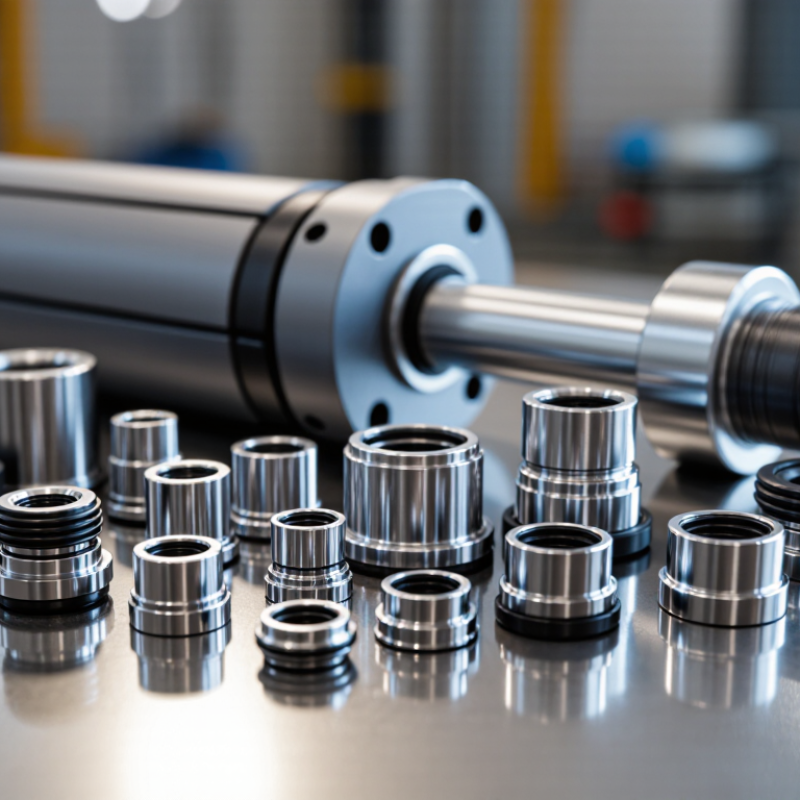
Top Pneumatic Seals Suppliers for Global Buyers?

Understanding Pneumatic Seals and Their Industrial Applications

Pneumatic seals help control compressed air around moving components, including piston rods and pistons inside cylinders. By limiting leakage, they support steady motion and help equipment maintain its intended force. You will find them in packaging lines, factory automation, vehicle systems, and material-handling equipment. The seal may be small, but a nick on its contact edge can cause sluggish movement or a faint hiss. Small details matter.

Choosing a seal means considering pressure, temperature, motion speed, and the air supply. Dust, moisture, and compressor oil can affect wear, while an unsuitable material may harden or swell over time. Some designs work with little lubrication; others depend on specific operating conditions. A seal that looks right on paper can still perform poorly in a real cylinder. That deserves a second look. Suppliers should provide clear material data, dimensional guidance, and application support, not just a product listing.

Tips: Check the cylinder’s groove dimensions and operating range before ordering. Keep compressed air clean and inspect seals during scheduled maintenance. If leakage returns quickly, examine the rod surface and alignment too; replacing the seal alone may not fix the cause.

Criteria for Evaluating Pneumatic Seal Suppliers

When comparing pneumatic seal suppliers, start with the cylinder’s real operating conditions. Record pressure, temperature, speed, and the air or lubricant in contact with the seal. A seal that performs well on a test bench may behave differently in a dusty workshop or under frequent cycling. Ask suppliers how they match materials and profiles to these conditions.

Look for clear technical data, not broad promises. Useful evidence includes dimensional tolerances, material specifications, leakage test methods, and batch traceability. Check whether the supplier can explain how a lip profile handles friction and wear. Small details matter. A sample fitted to your own cylinder can reveal issues that a catalogue cannot, though one trial is not enough to predict every service condition.

Evaluate consistency and communication alongside price. Ask about typical lead times, minimum order quantities, and how production changes are documented. A technically capable supplier should answer specific questions without treating every application as identical. It is tempting to rely on a polished datasheet; I have found that practical installation feedback can expose gaps in the specification. No checklist removes all uncertainty, so record test results and review them after the seals have run in your equipment.

Leading Suppliers and Their Product Specialties

Pneumatic seal suppliers often specialize by seal design, material, or operating conditions. Some focus on piston and rod seals for cylinders, while others offer wipers, guide rings, and complete seal sets. Their product range matters, but so does how clearly they explain fit and performance. A useful supplier can discuss pressure, temperature, shaft speed, air quality, and lubricant compatibility. Small details matter. A seal that looks correct in a catalog may still fail if its groove dimensions or material grade are wrong.

For global buyers, compare suppliers by technical support as well as product breadth. Ask for dimensional drawings, material data, tolerances, and inspection records for the parts under consideration. Suppliers with molding or machining capabilities may support custom profiles and smaller production runs; distributors may offer faster access to standard sizes. Neither model is automatically better. One weakness in many sourcing checks is relying too heavily on sample parts: a good sample does not confirm consistent production. Request batch-level quality information and clarify how changes to materials or tooling are communicated. Response speed is useful, but precise answers are more reassuring.

Top Pneumatic Seals Suppliers for Global Buyers: Product Material Specialties

Typical upper continuous service temperatures for common pneumatic seal materials

Material capabilities vary by formulation, pressure, media, and operating conditions. Use these figures as a general comparison, not as a specification for a particular supplier or product.

Comparing Global Reach, Customization, and Support

Global buyers comparing pneumatic seal suppliers should assess reach, customization, and support together. A supplier may ship widely but offer limited help with unusual cylinder dimensions. Ask where stock is held, which regions receive regular deliveries, and how shipping updates are handled. A seal needed for a repair next week is different from one planned for a production run next quarter.

Customization should start with clear measurements and operating conditions. Share groove dimensions, pressure range, temperature, motion speed, and the fluid involved. Request a drawing or sample before approving a large order. Material choice matters: a seal suited to dry air may not perform the same way around lubricants. Small details matter. A broad catalog can feel reassuring, but it does not guarantee a good fit.

Tips: Ask for technical data, stated tolerances, and a realistic sample lead time. Check how quickly support answers a specific question, not just how quickly it sends a catalog. Keep written records of specifications and revisions. Some buyers focus heavily on unit price; that can be a mistake. Still, detailed documentation cannot remove every uncertainty, so test samples under actual equipment conditions when possible.

Selecting and Qualifying a Supplier for Your Needs

A pneumatic seal supplier should understand the conditions inside your equipment, not just the drawing. Share the cylinder bore, rod diameter, stroke speed, pressure range, temperature, and working fluid. A seal that performs well in clean, cool air may wear quickly in a fast cycle or dusty environment. Small details matter.

Ask how the supplier controls dimensions and material consistency. Request technical data, inspection records, and samples made to the same specification as production parts. Check whether the proposed elastomer suits your temperature range and exposure to lubricants. Then test samples in your own assembly, if possible. Watch for leakage, drag, and visible wear over repeated cycles. A short bench test is useful, but it may not reflect months of service.

Communication is part of qualification. Send a marked-up drawing and see whether the supplier flags unclear tolerances or unusual groove dimensions. No checklist catches everything. Lead time, minimum order quantities, and support for design changes also affect the real cost. A polished datasheet is reassuring, but it cannot replace a careful trial. I would revisit the selection after field feedback; initial assumptions about wear can be wrong. Keep test results and revision details together, so future orders can be compared fairly.

Top Pneumatic Seals Suppliers for Global Buyers? - Selecting and Qualifying a Supplier for Your Needs

Supplier qualification matrix for comparing pneumatic seal capabilities. Use the criteria and suggested targets to assess prospective suppliers against your application requirements.

Evaluation Dimension What to Verify Suggested Qualification Target Evidence to Request
Product Range Availability of piston seals, rod seals, wipers, guide rings, O-rings, and custom profiles for pneumatic cylinders and valves. Confirm the supplier can support the required seal type, dimensions, operating motion, and installation arrangement. Product catalog, dimensional drawings, profile descriptions, and application-specific recommendations.
Material Selection Material options such as polyurethane (PU), nitrile rubber (NBR), EPDM, FKM, and PTFE, where suitable for the application. Require a documented material recommendation based on temperature, compressed air quality, lubrication, wear, and chemical exposure. Material data sheets, compound identification, temperature guidance, and compatibility information.
Operating Conditions Pressure, temperature, speed, stroke, duty cycle, and expected service life supported by the proposed seal design. Check the supplier’s stated limits against the actual operating envelope; do not assume one rating applies to every profile or material. Technical datasheets and written confirmation of suitability for the specified operating conditions.
Dimensional Capability Manufacturing capability for standard sizes and custom dimensions, including tolerances and housing requirements. Require drawings and tolerances to be reviewed against the cylinder or valve design before ordering. Dimensioned drawings, tolerance details, inspection methods, and sample measurements.
Quality Management Documented quality processes, incoming-material controls, production inspections, and nonconformance handling. Request current quality-system documentation, such as ISO 9001 certification where relevant, and confirm its scope and validity. Certificate details, quality procedures, inspection records, and corrective-action examples.
Testing and Validation Testing for leakage, wear, friction, dimensional conformity, and performance under representative pneumatic conditions. Agree on application-relevant acceptance criteria and test conditions before sample approval or production release. Test reports, sample evaluation results, test method descriptions, and validation plans.
Traceability Ability to link finished seals to material lots, production batches, and inspection records. Require lot or batch identification on packaging and a defined process for retrieving associated records. Sample labels, traceability procedure, batch records, and material documentation.
Customization and Engineering Technical support for profile selection, sealing design, prototype work, and design changes. Confirm engineering support is available during specification review and sample qualification. Design-review process, prototype capability, engineering contact process, and change-control documentation.
Supply and Lead Time Production capacity, standard-item availability, order minimums, and ability to manage demand changes. Obtain quoted lead times for samples and production orders, plus a documented plan for recurring demand. Capacity information, lead-time quotation, order terms, and supply-continuity procedures.
Packaging and Export Readiness Protection against contamination, deformation, and damage during storage and international transport. Agree on packaging, labeling, shelf-life guidance where applicable, shipping documents, and delivery terms. Packaging specification, label example, storage instructions, and export-document checklist.
Commercial Evaluation Unit pricing, tooling or setup charges, payment terms, warranty provisions, and cost of quality support. Compare total landed cost and lifecycle suitability, not unit price alone. Itemized quotation, commercial terms, tooling ownership terms, and warranty or claims process.

Qualification tip: Evaluate suppliers using the same part drawings, operating conditions, sample requirements, and acceptance criteria. Material and performance limits vary by seal design, compound, and application.