China Top 10 FM Radio Transmitter Kit Manufacturers
Choosing a reliable Fm Radio Transmitter Kit manufacturer takes more than comparing prices or advertised range. Buyers should examine frequency stability, audio performance, output specifications, component quality, and the clarity of the assembly instructions. Small details matter. A loose connector or vague schematic can turn a promising project into hours of troubleshooting.
Communications theorist Claude Shannon described the broader challenge behind every transmitter: “The fundamental problem of communication is that of reproducing at one point either exactly or approximately a message selected at another point.” His insight is relevant here: a kit must do more than produce a signal; it should help users transmit intelligible audio consistently. For this guide, the Top 10 manufacturers are considered through practical criteria, including product documentation, quality control, technical support, and the suitability of their kits for different levels of experience. Claims about range or performance should be checked against published specifications, not taken at face value.
No list is perfect. Manufacturer offerings change, and one company’s strongest kit may not suit every project. Some buyers need clear assembly guidance; others care more about stable operation and accessible replacement parts. The sections ahead introduce notable manufacturers and highlight what to compare before purchasing. Check local requirements for permitted frequencies and operation. A careful comparison—and a little healthy skepticism—can make the choice more dependable.
What Is an FM Radio Transmitter Kit?
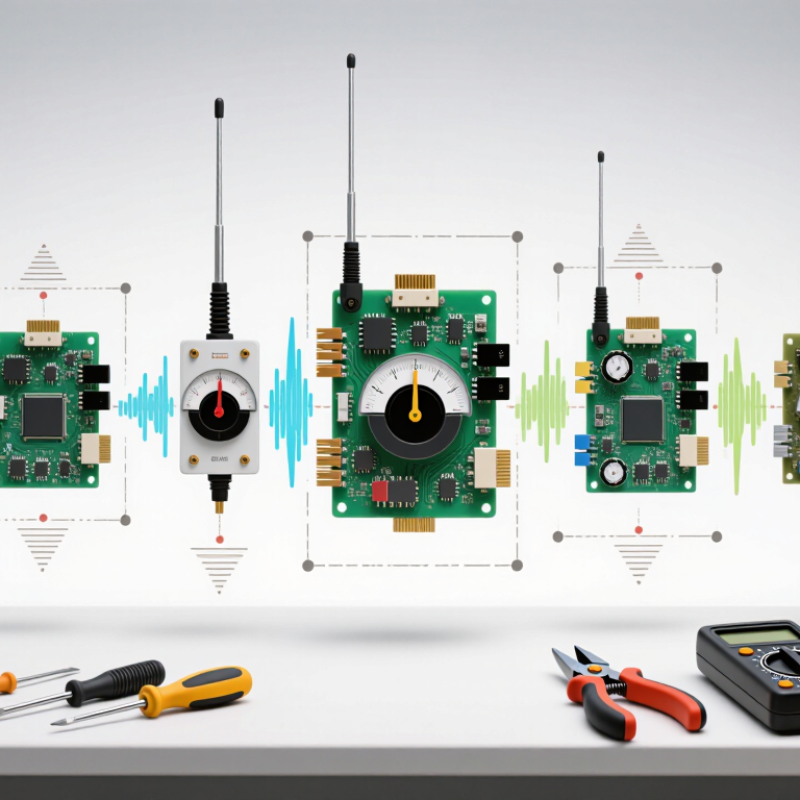
An FM radio transmitter kit is a collection of electronic parts and instructions for building a low-power device that sends audio over an assigned FM frequency. A typical kit includes an oscillator, audio input, modulation circuit, amplifier, and antenna connection. Some also provide a power supply and a basic enclosure. The audio signal changes the carrier frequency slightly, allowing a compatible FM receiver to reproduce sound. It is not magic. Careful assembly matters.
Ofcom’s 2024 Media Nations report found that about 84% of UK adults listened to radio weekly, showing the medium’s continuing reach. For a kit, however, useful performance depends on more than whether it powers on. Builders should check frequency stability, output level, antenna matching, and filtering, then follow the supplied test procedure. A poorly adjusted circuit may sound noisy or drift from its intended frequency. Small details matter. Even a tidy solder joint cannot replace measurement with suitable test equipment. I have found that instructions often make setup look simpler than it feels at the bench; beginners should allow time to troubleshoot and verify each stage.
Overview of China’s FM Transmitter Kit Manufacturing Industry
China’s Fm Transmitter Kit manufacturing industry relies on a broad electronics supply chain, from printed circuit board fabrication to final assembly. Production can include component sourcing, soldering, enclosure work, packaging, and preparation of user instructions. Some suppliers offer standard kits, while others adjust board layouts or connectors for specific customer requirements. Small details matter. Connector fit, solder quality, and a clear parts list can shape the user’s experience more than polished product photos.
Manufacturing capabilities vary between suppliers. Buyers can ask how components are inspected, whether each assembled unit receives a functional check, and what documentation comes with an order. Sample evaluation is useful: check the board finish, the consistency of included parts, and whether the assembly guide matches the actual kit. Testing and certification requirements also depend on the intended market, so these should be confirmed before purchase rather than assumed.
The sector benefits from established electronics production networks, but that does not make every batch identical. Still, the market is not perfectly uniform. Component substitutions, changing lead times, and uneven documentation can create friction, especially for smaller orders. Clear specifications and written quality expectations help reduce misunderstandings. A supplier’s response to technical questions can also reveal how carefully it manages production, though it is not a substitute for inspection.
Criteria for Evaluating Chinese FM Transmitter Kit Manufacturers
When comparing Chinese FM transmitter kit manufacturers, look beyond catalog claims. Ask for a current bill of materials, circuit diagram, and clear output specifications. A reliable supplier should explain frequency stability, modulation performance, power limits, and supported supply voltage. Request recent test records tied to the exact kit revision, not a generic sample. Small details matter.
Inspect workmanship through photographs or a sample unit. Check solder joints, connector fit, labeling, and whether the instructions match the board in the box. Ask how components are screened and how defects are handled. For repeat orders, compare the same measurements across batches. A polished brochure is not proof, and a single sample may not reveal every production issue.
Evaluate engineering support before placing a large order. Send a practical question about assembly, calibration, or troubleshooting, then note the response time and technical detail. Clarify minimum order quantities, lead times, packaging, warranty terms, and spare-part availability in writing. Confirm the kit’s intended use and check applicable local radio requirements before operation. Sample testing takes time. Prefer suppliers willing to share inspection steps and discuss limitations rather than promise perfect results.
China Top 10 FM Radio Transmitter Kit Manufacturers — Criteria for Evaluation
FM Broadcast Frequency Coverage by Market
Frequency coverage is a key criterion when evaluating an FM transmitter kit. These bars show commonly used broadcast-band ranges in MHz; confirm the applicable allocation and regulations for the intended market before selecting equipment.
Product Features and Applications of FM Transmitter Kits
FM transmitter kits combine a frequency source, audio input stage, oscillator, and antenna connection in a compact circuit. Many include adjustable frequency controls, basic tuning components, and connection points for a microphone or line-level audio. The exact features vary, so check the circuit diagram and power requirements before assembly. Small details matter.
For education, a kit can help learners observe how audio signals interact with a radio-frequency carrier. Connecting a tone generator and viewing the output with suitable test equipment makes the process more tangible. In controlled demonstrations, instructors can discuss modulation, signal clarity, and interference without relying only on diagrams. A stable power supply helps reduce inconsistent results.
These kits may also support bench testing and low-power demonstrations in appropriately shielded or otherwise authorized settings. Use only frequencies and operating conditions permitted by local rules, and avoid transmitting beyond the intended test area. A short wire antenna can behave differently near metal benches or cables. That can be frustrating. I have found that careful setup matters as much as the circuit itself, though a kit’s documentation may not explain every practical limitation.