
×

7 Tips for Choosing a Potato Chips Production Line

A Potato Chips Production Line is not just a fryer and a conveyor. It is a sequence of decisions that shapes chip quality, operating costs, and production consistency. FAOSTAT reports that global potato production exceeded 370 million tonnes in 2022, supplying a large raw-material base for fresh and processed products. Yet potatoes vary. Their size, solids, sugar levels, and moisture can change with variety, season, and storage. A line must handle that variation without sacrificing crispness or creating unnecessary waste.

The right equipment choice starts with the product and the target output. Washing and peeling capacity matter, but so do slicer accuracy, fryer temperature control, oil filtration, seasoning coverage, cooling time, and packaging speed. Picture a thin slice entering the fryer: a small thickness difference can affect color and texture across an entire batch. Buyers should also inspect cleanability, food-contact surfaces, energy use, operator access, and the supplier’s service plan. A fast line is not automatically a reliable one.

This guide presents seven practical checks for comparing a Potato Chips Production Line, from capacity claims to commissioning support. It draws on FAOSTAT’s production data and established food-processing principles. No interview or source text was supplied for a verifiable quotation from a named potato-processing expert, so attributing a quote would risk inventing evidence. That limitation matters. A real supplier’s test results, product samples, and documented references are more useful than polished promises. Some figures may still look convincing on paper. Test them with your potatoes.
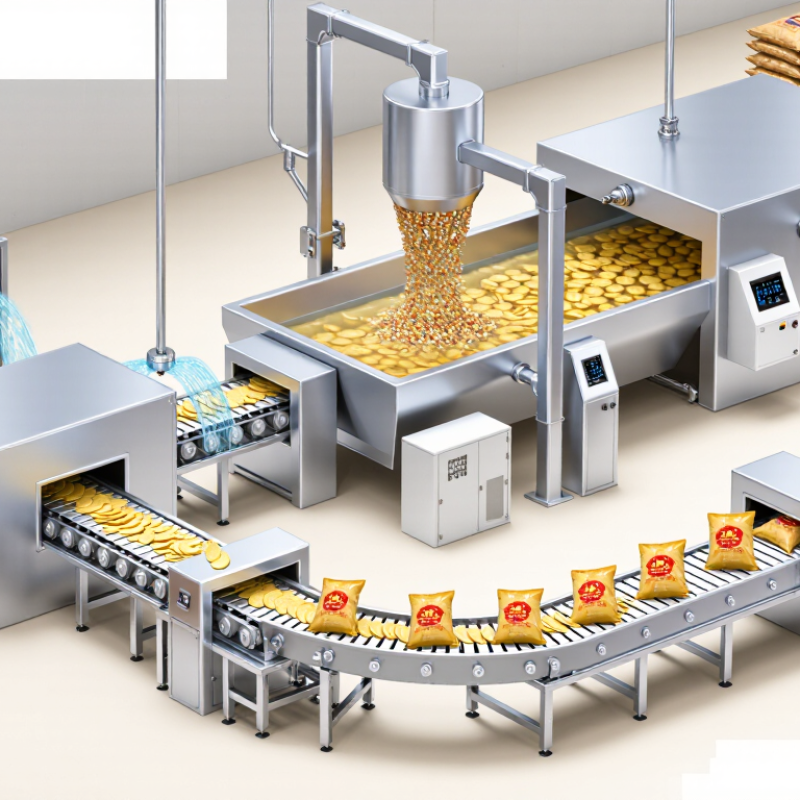
7 Tips for Choosing a Potato Chips Production Line

Define Production Goals and Required Output Capacity

Before selecting equipment, define the product mix, operating schedule, and sales forecast. FAOSTAT’s Crops and Livestock Products database records about 374 million tonnes of potatoes produced worldwide in 2022. That figure shows the scale of the raw-material supply, but it does not predict your local availability or demand. Check seasonal deliveries, potato size, dry matter, and storage conditions with suppliers. A steady supply of suitable potatoes matters as much as a fast fryer.

Convert your sales target into finished chips per hour, then allow for peeling, slicing, frying, seasoning, and packing limits. For example, a line rated at 500 kilograms per hour could produce 3.25 tonnes during 6.5 productive hours. Treat this as a planning example, not a guarantee. Cleaning, oil changes, product switches, and unplanned stops reduce actual output. Plan for real hours. Ask suppliers for capacity figures using your intended potato variety and slice thickness, and request a trial run with measured yield and downtime. I would also leave room for growth; though, spare capacity can be wasteful if demand stays flat. Compare the expected daily output with realistic sales, available storage, and the number of shifts your team can sustain.

Compare Line Configurations and Processing Stages

A potato chips production line should match the product, available floor space, and realistic daily output. A compact setup may combine washing, peeling, slicing, rinsing, and dewatering in a short sequence. It can suit a smaller facility, but operators may have fewer options when changing slice thickness or adding capacity. Larger continuous lines separate these stages, making adjustments easier and reducing manual transfers. They also need more space and careful coordination between machines.

Compare the full process, not just the fryer. Potato variety and slice thickness affect washing, cutting, and frying time. A test slice can reveal uneven thickness before it becomes a full-batch problem. Some lines include peeling; others leave the skin on, so peeling equipment may be unnecessary. After slicing, rinsing removes surface starch, while dewatering helps limit water entering the fryer. Seasoning drums and packaging equipment should match the intended product and output rate. Small details matter.

Ask suppliers for measured throughput under conditions close to your own, including the potato size and target slice. Nameplate capacity can be optimistic. Check cleaning access, oil filtration, and how quickly staff can switch recipes. A modular line offers room to grow, though extra connections can complicate installation. I would not choose the fastest configuration by default; steady product quality and manageable cleaning often matter more during a long production shift.

7 Tips for Choosing a Potato Chips Production Line - Compare Line Configurations and Processing Stages
Tip Line Configuration to Consider Main Processing Stages What to Compare Practical Selection Check
1. Match the line to your product Fresh-potato line for traditional sliced chips; formed-chip line for products made from potato flakes, granules, or other dry ingredients. Fresh-potato route: washing, peeling, slicing, rinsing, frying, seasoning, and packing. Formed-chip route: ingredient mixing, forming, cooking, seasoning, and packing. Compare raw-material requirements, product shape, texture, and the processing steps needed for each product type. Confirm that the proposed process can consistently make your intended chip style and recipe before comparing equipment price.
2. Choose capacity around real demand Single production line for a focused operation; multiple lines or a larger integrated line for higher or varied output requirements. Capacity depends on the connected stages, including slicing or forming, cooking, seasoning, cooling, and packaging. Compare rated output with expected saleable output, operating hours, changeovers, and the capacity of downstream equipment. Ask suppliers to state the conditions behind quoted capacity, such as product size, moisture, operating schedule, and packaging format.
3. Review preparation and slicing controls Fresh-potato configuration with washing, inspection, peeling as required, and adjustable slicing equipment. Receiving and sorting → washing → peeling when needed → slicing → rinse or starch removal where appropriate. Compare slice-thickness adjustment, uniformity, product handling, cleaning access, and how the line accommodates potato variation. Check sample slices from representative raw potatoes; consistent thickness helps support more even cooking.
4. Compare frying or cooking systems Continuous fryer for a steady-flow operation; batch fryer for smaller or less continuous production needs. Product feeding → frying or other specified cooking method → de-oiling or draining → cooling. Compare temperature control, residence-time adjustment, oil circulation and filtration provisions, heat source, and cleaning requirements. Evaluate product quality and oil-management procedures under the intended recipe and production conditions.
5. Plan seasoning and flavor changes Seasoning drum or comparable application equipment; consider provisions for accurate powder or liquid dosing where recipes require them. Cooking → draining or de-oiling → seasoning → cooling or transfer to packing. Compare coating uniformity, seasoning recovery or control features, changeover time, and access for cleaning between flavors. Run trials with the intended seasoning and target application level; confirm that the equipment can handle the formulation.
6. Size cooling and packaging together Cooling conveyor connected to packaging equipment selected for the required bag format and production rate. Seasoned product → cooling and conveying → weighing → bag forming and sealing → finished-pack inspection. Compare throughput balance, weighing accuracy, seal requirements, package size range, and provisions for product inspection. Check that packing capacity can keep pace with the cooking line and that chips are sufficiently cooled for the chosen packaging process.
7. Check integration, hygiene, and future flexibility Integrated line with compatible conveyors, controls, guarding, and accessible cleaning and maintenance points. Review the full route from raw-material intake through finished-pack discharge, including transfers between every stage. Compare equipment footprint, utilities, food-contact materials, cleanability, control-system interfaces, spare-parts support, and expansion options. Request a layout and utility list, confirm cleaning and maintenance access, and identify any capacity bottleneck before installation.

Evaluate Equipment Materials, Automation, and Energy Use

A potato chips line works in hot oil, salt, moisture, and frequent washdowns. Specify food-contact stainless steel, then inspect the details: smooth welds, sealed joints, and belt edges that do not trap crumbs. Grade selection should reflect the cleaning chemicals and operating conditions; more expensive metal is not automatically better. Small details matter. Ask suppliers for material certificates and cleaning guidance, and check whether guards and panels can be removed without awkward tools. I would not specify the same metal everywhere without reviewing the actual wash routine.


Automation should help operators control feeding, frying temperature, oil circulation, and seasoning consistency—not just add screens. Variable-speed drives and temperature sensors can reduce unnecessary running and make process changes easier to track. Watch the washdown. The IEA’s Energy Efficiency 2023 report estimates that industry accounts for about 37% of global energy use, a useful reminder to examine motors, heaters, and idle time when comparing lines. Request measured energy use per kilogram of finished chips, with product rate and operating conditions stated. Those figures are only comparable when the tests match. A line that looks efficient on paper may consume more energy during frequent stops or low-volume runs. I would ask to see a logged trial, then check the readings against the actual factory schedule.

Check Food Safety, Quality Control, and Maintenance Needs

A potato chips line should be judged by how easily its food-contact surfaces can be inspected and cleaned, not by appearance alone. A shiny machine is not automatically a clean one. Check fryer drains, conveyor joints, seasoning hoppers, and guards for trapped crumbs or oil. The Codex Alimentarius General Principles of Food Hygiene (CXC 1-1969, revised 2022) calls for hazard-based controls and effective hygiene practices. Apply that thinking to raw potato handling, frying, cooling, and packaging. Record oil temperature, filtration checks, and metal-detector tests by batch. Seasoning changes also deserve attention, especially where allergens are present.

The risk is real. WHO’s 2015 foodborne-disease estimates attributed about 600 million illnesses and 420,000 deaths worldwide to contaminated food each year. CDC estimates for the United States, published in 2011, reported 48 million illnesses, 128,000 hospitalizations, and 3,000 deaths annually. These figures cover food broadly, not chips alone, but they show why controls matter. Ask suppliers how operators verify sensor accuracy, preserve traceability, and respond to failed checks. Maintenance access matters too: inspect whether crews can safely reach belts, bearings, fryer filters, and cooling fans. Request a preventive-maintenance schedule and critical-spares list. I would not assume a long warranty prevents downtime; practical access can matter more. Run a cleaning and changeover trial before purchase. A rushed trial may miss the awkward corners.

Assess Total Costs, Supplier Support, and Future Expansion

A quoted purchase price rarely shows the real cost of a potato chips production line. Compare energy use, oil filtration, water needs, staffing, and packaging equipment, not just fryer capacity. Ask suppliers for a utility list and a sample shift calculation based on your target output. Small details matter. A conveyor that needs frequent manual cleaning can quietly add labor hours every week.

Check what service includes before signing. Will technicians help with commissioning, operator training, and recipe adjustments, or only answer urgent calls? Request a written spare-parts list, typical response times, and remote troubleshooting arrangements. Ask how they would diagnose uneven color across a batch. A sound answer should consider temperature control, slice thickness, and oil condition, rather than blaming the operator by default. Even a complete-looking plan can miss a small sensor or connector.

Future expansion begins with today’s layout. Leave room for a second fryer, wider conveyors, extra seasoning drums, and larger packing machines. Check whether controls can handle added modules and whether utilities have spare capacity. Growth may be slower than forecast. That is worth admitting. A modular line can limit upfront spending, but repeated upgrades may cost more than a correctly sized system. Ask for options based on current demand and a realistic three-year scenario. Use your production records where possible; forecasts can be optimistic during a new product launch.