Lamination Machine Tips for Perfect Projects Every Time?
Using a Lamination Machine can transform your projects. It adds durability and a professional finish to your work. However, achieving perfect results can be challenging. There are a few key tips to help you avoid common mistakes.
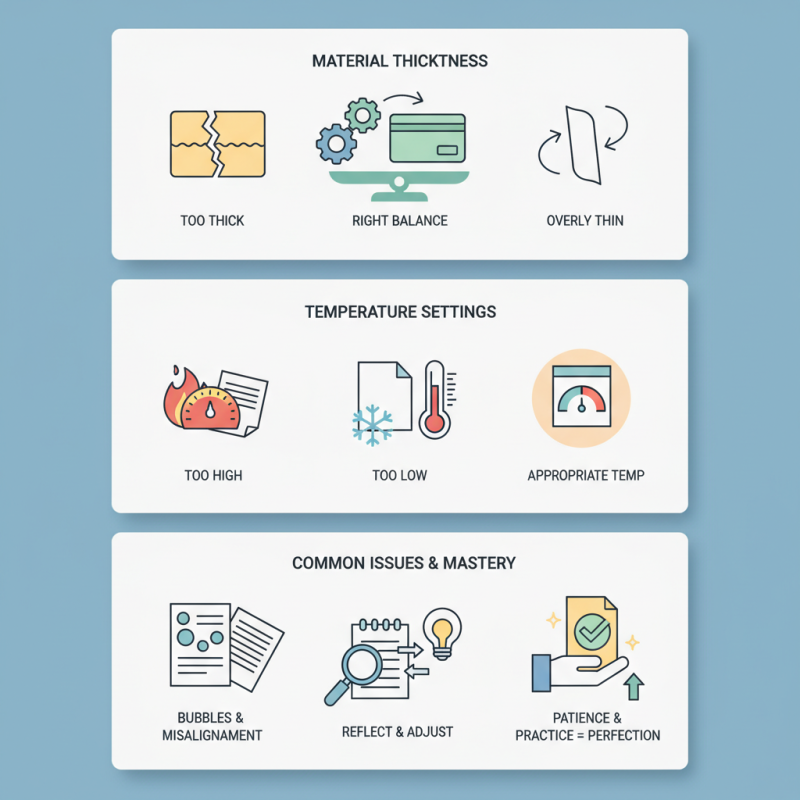
One important aspect is the thickness of your materials. If you use items that are too thick, they may not laminate correctly. On the other hand, overly thin materials can curl or warp during the process. It's vital to find the right balance. Next, ensure your Lamination Machine is set to the appropriate temperature. Too high or too low can ruin your work. Many users overlook this detail, only to face disappointing outcomes.
While mastering your Lamination Machine takes practice, the effort pays off. You’ll sometimes encounter bubbles or misalignment. Reflecting on these issues can lead to improvement. Understanding how to adjust your approach makes a difference. With patience and these insights, you'll elevate your lamination skills in no time.
Understanding the Basics of Lamination Machines
Lamination machines are essential for preserving and enhancing documents. Understanding their basics can greatly improve your lamination projects. These machines typically heat and seal plastic sheets around your materials. This creates a protective layer, preventing wear and tear. However, not all lamination machines work the same way. Knowing your machine is key.
Here are some tips for perfect lamination. First, always clean the laminating rollers before use. Dust and debris can ruin your project. Second, ensure your materials are cut precisely. Uneven edges may lead to bubbling. Lastly, experiment with different temperature settings. Sometimes, a little adjustment can make a significant difference.
Don’t be afraid to reflect on mistakes. For instance, if bubbles appear in your project, check the settings. It could be too cold or too fast. Those imperfections can help you learn and grow. Take your time, and each project will get better. Understanding your machine's features will make your lamination journey smoother.
Avoid rushing; perfection often lies in the details.
Choosing the Right Laminating Film for Your Project
Choosing the right laminating film is crucial for the success of your project. There are various types of laminating films available, including standard, glossy, and matte finishes. Each type serves a unique purpose and can impact the overall look and durability of your work. Research suggests that 45% of users prefer glossy finishes for vibrant colors, while matte appeals to 35% who seek a professional appearance.
When selecting laminating film, consider the thickness. Films vary from 1.5 mil to 10 mil, which affects durability. Reports indicate that 70% of professionals recommend using a 3 mil film for everyday projects, blending protection with manageability. Thicker films, while sturdy, can drape strangely if not applied correctly.
Tips for optimal results include keeping lamination equipment clean. Dirty rollers can create bubbles and imperfections. Always ensure that the edges of your documents are aligned before starting. This careful attention to detail helps prevent wasting materials on rework. Reflect on how a small flaw can detract from a well-planned project. Remember, perfection is a journey, not a destination.
Lamination Machine Tips for Perfect Projects Every Time
Choosing the Right Laminating Film for Your Project
Step-by-Step Guide to Setting Up Your Lamination Machine
Setting up your lamination machine efficiently can make a significant difference in your projects. Start by placing the machine on a flat, sturdy surface. Make sure there's enough space around it for easy access and airflow. Check the power source and plug it in. A common mistake is not ensuring the outlet works before starting.
Next, prepare the items you intend to laminate. Trim them carefully to avoid any edges sticking out. Always use the correct laminating pouches; using wrong sizes can lead to poor results. Don't forget to feed only one item at a time to prevent jams. If the machine jams, patience is key. Avoid forcing it; this can cause damage.
Once everything is set, adjust the temperature settings as needed. Some items may require different temperatures for the best result. Monitor the process closely. If your lamination isn't smooth or the edges lift, these are signs of a need for adjustment. Keep a notebook handy to jot down what works and what doesn't. Learning from each project will improve your skills over time.
Common Mistakes to Avoid When Laminating
When laminating, it's easy to make mistakes that ruin your project. One common error is not cleaning the surfaces properly. Dirt or grease can cause bubbles or wrinkles. Always wipe down your materials before starting. Another mistake is choosing the wrong laminate thickness. Thinner films can be flimsy, while thicker options might not adhere well. It's crucial to pick the right type for your needs.
Temperature control is often overlooked. If the machine is too hot, the laminate may warp or melt. If it's too cool, the seal may not stick properly. Take the time to adjust the settings carefully. Moreover, inserting items at an angle can also lead to uneven sealing. Always feed your project straight into the machine for a clean finish. These little details make a huge difference in achieving a flawless result.
Maintaining Your Lamination Machine for Long-Term Use
Maintaining your lamination machine is essential for achieving high-quality results. Regular cleaning helps prevent dust and debris from affecting performance. A simple wipe down can prolong its lifespan. Remember to check the heating elements regularly. Any irregularities can lead to inconsistent lamination quality.
Keep an eye on the rollers. They can wear out over time, impacting the final product. If you notice uneven lamination, it might be time to adjust or replace them. It's also beneficial to test various thicknesses of laminating pouches. Sometimes, you may not achieve perfect seal on the first try. Learning through trial and error is part of the process.
Another area to focus on is the settings of your machine. Incorrect temperature or speed can ruin your project. Always consult the manual for optimal settings. However, don’t be afraid to experiment a bit. Each project might require different adjustments. Embrace the imperfections along the way; they often lead to learning what works best for you.