How to Choose the Right Compact Wheel Loader for Your Needs?
Choosing the right Compact Wheel Loader can be challenging. With many options available, it's easy to feel overwhelmed. Your specific needs must guide your decision.
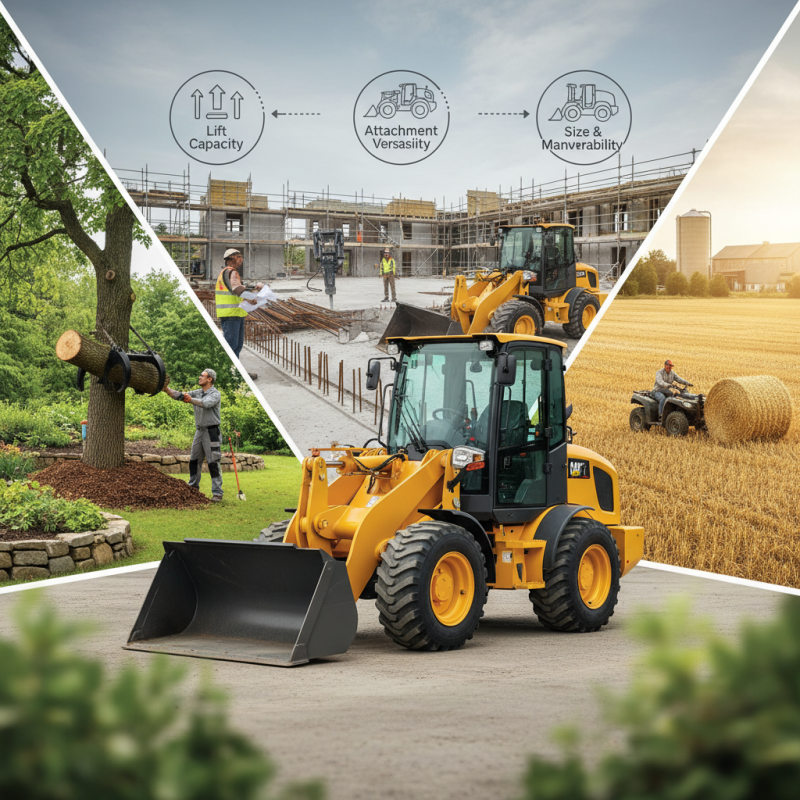
Consider the type of jobs you'll perform. Will you use it for landscaping, construction, or agriculture? Each task demands different features. Analyze the loader's size, lift capacity, and attachments. These factors significantly affect performance.
Sometimes, buyers overlook important details. They may focus only on cost, ignoring essential specifications. This approach can lead to regret. Take your time to evaluate your requirements. A thoughtful decision today ensures efficiency and success tomorrow.
Understanding Compact Wheel Loaders: Key Specifications and Features
When selecting a compact wheel loader, understanding key specifications is crucial. These machines vary significantly in capacity, power, and dimensions. Pay attention to the operating capacity, which typically ranges between 1,500 to 4,500 pounds. Make sure it matches your intended applications.
Next, consider the engine power. Loaders with higher horsepower can handle tougher jobs but may consume more fuel. Evaluate your needs carefully here. Some compact models come equipped with advanced hydraulic systems. These features can enhance performance, yet they also may complicate repairs. If you’re not experienced with machinery, simpler can be better.
Finally, dimensions matter. A smaller turning radius helps in tight spaces. Conversely, a wider frame provides more stability. Balance your need for agility against the requirement for sturdy lifting. Test the machine in real conditions. This helps ensure it meets your expectations. Remember, choosing the right loader is a mix of assessing specifications and reflecting on personal experience.
How to Choose the Right Compact Wheel Loader for Your Needs?
| Feature | Specification | Importance |
| Operating Weight | 3,000 - 6,000 lbs | Affects stability and lifting capacity |
| Engine Power | 40 - 100 HP | Determines overall performance |
| Bucket Capacity | 0.5 - 1.5 cu yd | Impacts amount of material moved |
| Lift Height | 8 - 12 ft | Advantageous for loading trucks |
| Hydraulic Flow | 10 - 30 GPM | Affects attachment performance |
| Tire Type | Standard, Wide, or Turf | Influences traction and surface damage |
| Cab Features | Heated, Air-conditioned, Enclosed | Enhances operator comfort |
Evaluating Engine Power and Performance in Compact Wheel Loaders
When selecting a compact wheel loader, evaluating engine power and performance is vital. A loader's engine significantly affects its productivity and efficiency. According to industry reports, machines with engine power ranging from 60 to 100 horsepower are ideal for most compact tasks. This range allows for a balance between power and fuel efficiency, crucial in reducing operational costs.
Performance metrics like lifting capacity and breakout force also depend on engine specifications. For example, an engine producing about 80 horsepower can typically lift loads between 1,500 to 3,000 pounds. However, users often overlook the importance of torque. Engines that provide a higher torque rating can improve efficiency in heavy-duty applications. Yet, not addressing the machine's weight-to-power ratio may lead to operational inefficiencies.
It's essential to consider the specific tasks the loader will perform. Many operators find themselves underestimating the required power. This can lead to a machine that struggles under heavier loads. Failing to assess the proper engine size can result in frequent breakdowns or reduced productivity. Assessing real-world applications and comparing performance data can provide crucial insights. Hence, make informed decisions that fit operational needs and site requirements.
Assessing Load Capacity and Hydraulic Performance for Your Applications
When selecting a compact wheel loader, assessing load capacity and hydraulic performance is crucial. Load capacity directly impacts the efficiency of your projects. According to industry reports, compact wheel loaders typically offer load capacities ranging from 1,000 to 3,500 pounds. Knowing your specific needs helps prevent overloading, which can lead to equipment damage or safety hazards.
Hydraulic performance significantly affects productivity. A compact wheel loader’s hydraulic system should provide adequate power for your tasks, whether it's lifting, digging, or material handling. Reports indicate that machines with a hydraulic flow rate of 15 to 25 gallons per minute are ideal for most earthmoving tasks. However, you may encounter limitations if the machine is underpowered.
Your choice also depends on the attachments you plan to use. Different jobs require various tools, and not every loader can handle the same attachments. Evaluating the compatibility of your loader with these tools ensures you maximize performance. The wrong choice can result in inefficient operations and increased downtime. Consider analyzing job sites and consulting with industry experts to refine your decision.
Load Capacity and Hydraulic Performance of Compact Wheel Loaders
Considering Attachments and Versatility for Diverse Job Sites
When selecting a compact wheel loader, versatility plays a crucial role. The right attachments can significantly enhance a loader's functionality. For example, a recent industry report indicates that nearly 67% of construction projects require equipment with interchangeable attachments. This flexibility allows operators to use the loader for various purposes, from lifting to digging.
Consider job site requirements carefully. Different environments demand different attachments. For instance, a site with a lot of gravel may benefit from a bucket attachment. Conversely, a landscape project might need a grapple or fork. It's essential to understand these needs in advance. Many operators overlook the importance of this planning phase.
Moreover, be mindful of the loader's compatibility with attachments. Some models face limitations. A loader might excel in height but struggle with stability when combined with heavier tools. Finding the right balance requires attention to detail. Investing time in assessing attachments early can prevent costly mistakes later.
Analyzing Cost vs. Value for Compact Wheel Loaders in Your Budget
When considering a compact wheel loader, analyzing cost versus value is crucial. Data shows that the average price range for these machines is between $20,000 and $80,000. However, how do you gauge their true value? Features, productivity, and maintenance are key elements to consider. For instance, loaders with higher lifting capacities often come at a premium. Yet, they can significantly enhance operational efficiency.
Let's look at maintenance costs. According to industry reports, regular maintenance can account for roughly 10% of the total ownership cost. A loader that requires frequent repairs may seem affordable upfront but could drain your budget in the long run. This is where value becomes critical. A higher initial investment may lead to lower maintenance costs, proving beneficial over time.
Understanding your operational needs is essential. For example, if your tasks require versatility, a loader with a variety of attachments may be worth the extra cost. Pay attention to payload capacity and fuel efficiency as well. Reports indicate that highly efficient models can reduce fuel consumption by up to 30%. This factor can dramatically impact your overall expenses. Balancing these aspects involves thoughtful reflection on both current tasks and future projects.