How to Choose the Best Rain Umbrellas for Wholesale?
Choosing the best Rain Umbrellas for wholesale requires more than comparing colors, prices, and minimum order quantities. A buyer must examine how each umbrella performs in real weather. Strong wind, heavy rain, repeated opening, and careless storage can expose weak construction quickly. The right product should protect customers and protect your profit margin.
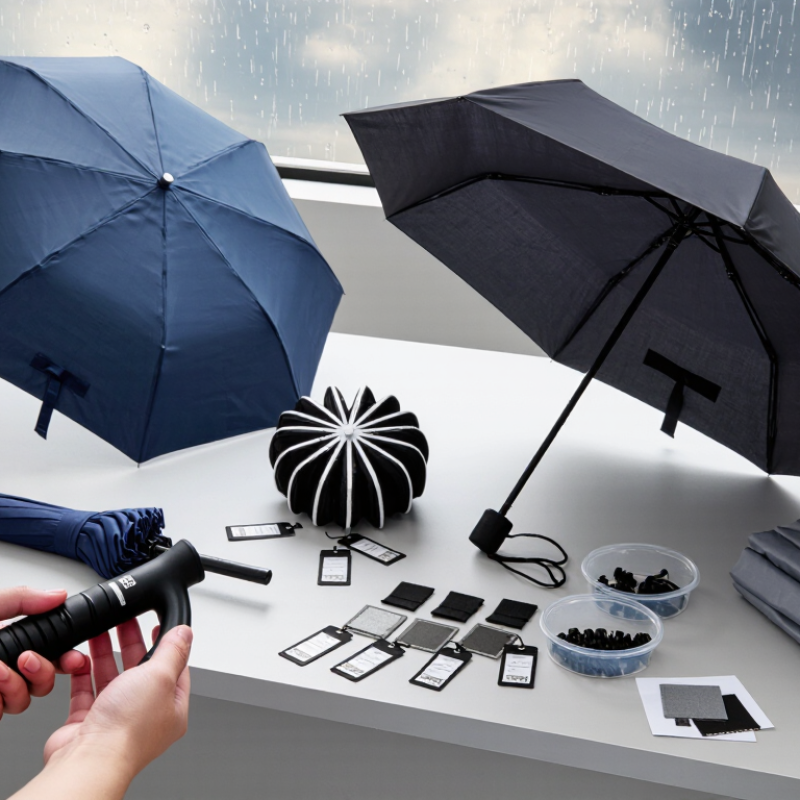
Umbrella sourcing specialist David O’Connor explains, “A wholesale umbrella must survive the shelf, the storm, and the return desk.” This practical view matters. Inspect the canopy fabric, frame joints, shaft alignment, runner movement, handle grip, and automatic mechanism. A tightly stitched polyester canopy may resist daily rain, while reinforced ribs can reduce breakage during sudden gusts. Ask suppliers for material specifications, product samples, factory inspection records, and clear replacement policies. Do not trust attractive photographs alone.
Small details matter.
Consider packaging too. A wet umbrella packed without ventilation may develop an unpleasant smell before reaching the store. Test several samples, not just one perfect unit. Record opening cycles and observe the umbrella after strong shaking. Some models look impressive but feel unstable in the hand. Others have minor cosmetic flaws yet offer dependable performance. That difference deserves honest evaluation.
Wholesale decisions also depend on your customers. Compact umbrellas suit commuters, while larger golf-style models serve families and outdoor users. Balance unit cost against durability, shipping volume, branding space, and seasonal demand. There is no flawless choice. Even experienced buyers can overlook a weak button or uncomfortable handle. Careful testing, documented supplier communication, and realistic expectations create a more reliable Rain Umbrellas purchasing strategy.
Understanding Wholesale Rain Umbrella Types and Their Main Uses
Choosing the best rain umbrellas for wholesale starts with matching umbrella types to real customer needs. Grand View Research valued the global umbrella market at approximately USD 7.7 billion in 2022 and expects steady growth through 2030. This growth reflects demand for practical protection, seasonal products, and compact travel designs.
Folding umbrellas suit commuters, students, and convenience stores. Their short closed length saves shelf space, but small frames may perform poorly in strong wind. Straight umbrellas offer stronger shafts and larger canopies for offices, hotels, and daily outdoor use. Golf umbrellas cover two people and work well for resorts, sporting events, and premium gift programs. Transparent bubble umbrellas provide wider face protection and visual appeal, especially for fashion-led retail. Automatic opening adds convenience, while manual designs usually reduce purchase costs.
For wholesale selection, check canopy diameter, rib material, shaft strength, handle comfort, and waterproof coating. The Rainwear Market Report by Research and Markets identifies functional performance and portability as important purchase factors. Packaging also matters. Individual sleeves reduce scratches and improve display quality. Test samples under repeated opening, light wind, and wet storage conditions. I have seen attractive umbrellas fail because their ribs bent after limited use. That mistake is easy to repeat. A cheaper model may create higher replacement costs and customer complaints. Seasonal sales data should guide quantities, but weather remains unpredictable. Order a balanced range instead of relying on one style.
How to Choose the Best Rain Umbrellas for Wholesale?
Understanding Wholesale Rain Umbrella Types and Their Main Uses
This chart compares representative canopy diameters and closed lengths for common wholesale umbrella types. Compact umbrellas suit commuting and travel, straight umbrellas support everyday retail demand, golf umbrellas provide wider coverage for outdoor use, transparent umbrellas are popular for events and fashion retail, kids’ umbrellas target schools and children’s products, and inverted umbrellas are designed for convenient car entry and exit. Dimensions are typical midpoints from commonly sold product specifications and may vary by supplier.
Evaluating Materials, Construction, and Weather Protection
Choosing rain umbrellas for wholesale requires more than comparing canopy size and unit price. Material decisions affect durability, comfort, and perceived value. Polyester offers practical water resistance and usually holds color well. Nylon feels lighter, but it can stretch and degrade faster under strong sunlight. A coating should be even, without thin patches or a sharp chemical smell. Small details matter.
Construction deserves hands-on testing. Fiberglass ribs resist corrosion and flex better than rigid metal ribs. However, cheap fiberglass can split after repeated bending. Check the shaft for wobble, inspect the runner, and open each sample several times. It is an imperfect test, but it reveals weak joints quickly. According to ISO 811, fabric water resistance should be evaluated through hydrostatic pressure, not only surface spraying. Ask suppliers for test conditions, pressure results, and seam-treatment details.
Weather protection also needs realistic expectations. The NOAA 2023 Billion-Dollar Weather and Climate Disasters report recorded 28 major U.S. events, showing how frequently consumers face disruptive weather. The WMO State of the Global Climate 2023 report identified 2023 as the warmest year recorded, with more climate variability concerns. A vented canopy can reduce pressure during gusts, but it is not storm equipment. For wholesale selection, compare wind-cycle tests, canopy recovery after inversion, handle grip, and drying time. One weakness remains: laboratory performance may not match crowded streets, careless storage, or repeated daily use.
Comparing Sizes, Designs, Features, and Customization Options
Choosing rain umbrellas for wholesale requires more than comparing prices. Size affects comfort, storage, and shipping costs. Compact 21-inch models suit commuters and retail displays. Larger 27-inch or 30-inch canopies offer better coverage for business users. However, oversized umbrellas may feel heavy in crowded streets. Fit matters.
Design should match the customer’s daily routine. Folding umbrellas save space, while straight umbrellas often provide a stronger, more traditional feel. Vented canopies may improve stability during gusts. In product checks, I examine rib flexibility, shaft alignment, handle grip, and canopy stitching. Fiberglass ribs can reduce breakage, but no umbrella is storm-proof. That limitation should remain clear in product descriptions.
Features influence repeat orders. Automatic opening adds convenience, while manual designs can reduce mechanical failures. Water-repellent fabric, reinforced tips, and a comfortable handle improve practical value. Customization may include canopy colors, printed panels, handle choices, labels, and packaging. Logo placement needs testing because seams and folds can distort artwork. Requesting a physical sample is safer than approving a digital image alone. Color matching can also vary between fabric batches. I once considered appearance the main selling point; customer feedback showed that opening smoothly mattered more. Test before scaling. Keep expectations realistic.
Checking Supplier Quality, Certifications, Pricing, and Minimum Orders
Choosing rain umbrellas for wholesale requires more than comparing catalog photos. A reliable supplier should provide clear product specifications, sample units, and production records. Inspect the canopy stitching, shaft alignment, handle grip, and rib connections by hand. Open each sample repeatedly. A loose joint often appears before a visible tear. Ask for colorfastness, water-resistance, and material test reports from recognized laboratories. Certifications should match the destination market and product claims, not merely decorate a sales presentation.
Supplier quality also depends on consistency. Request photos from several production batches, not one perfect sample. Check factory inspection procedures, carton strength, labeling accuracy, and replacement policies. A short factory video is useful, but an independent pre-shipment inspection is stronger evidence. I have seen attractive samples fail because their packaging crushed handles during transport. Small details matter. Still, no inspection removes every risk. Weather testing can be limited, and real users may handle umbrellas roughly.
Pricing should include the umbrella, packaging, freight, duties, inspection, and possible defect costs. Compare landed prices, not only unit quotations. Ask whether the quoted price changes with fabric thickness, printing, automatic mechanisms, or reinforced ribs. Minimum order quantities deserve equal attention. A very low price with an excessive MOQ can trap cash in slow-moving colors. Request a mixed-color arrangement or a smaller trial order when possible. Suppliers may charge more for flexibility, but that cost can be sensible for testing demand. I sometimes underestimate seasonal demand, so sales data should guide the next order rather than optimism.
Selecting the Best Umbrellas for Your Target Market and Sales Strategy
Choosing the best rain umbrellas for wholesale starts with the target market, not the lowest factory quotation. Grand View Research estimated the global umbrella market at over US$7 billion in 2023, with continued growth expected through 2030. This suggests steady demand, but buyers still need a focused sales strategy. Office commuters may prefer compact, automatic umbrellas. Families often need larger canopies and stronger frames. Tourists may value light weight, bright colors, and easy storage.
Match product features with local weather and buying habits. In regions with sudden showers, test fast-opening mechanisms and compact sleeves. In windy coastal areas, inspect frame recovery after inversion and check canopy stitching. AATCC TM22 can help compare fabric water repellency, while repeated opening tests reveal weak springs and loose joints. Small details matter. Wet handles are often overlooked.
Price tiers can support different retail channels. Entry models suit promotional orders, while reinforced models fit outdoor and commuter stores. Packaging should show canopy size, fabric composition, and care instructions clearly. I would not choose black for every market; it is practical, but sometimes too ordinary. That assumption needs testing with local samples and retailer feedback. Stocking too many colors can also trap cash in slow-moving inventory. Use small trial orders, track sell-through, returns, and customer complaints before expanding. According to Fortune Business Insights, the umbrella market is projected to grow steadily through 2032, but growth alone will not fix poor product-market fit.