×

How to Choose the Best Battery Laser Welder?

Choosing the right Battery Laser Welder is not simply a matter of comparing power ratings or advertised speed. The weld must suit the battery’s materials, joint design, production volume, and quality requirements. A copper tab and a thin nickel strip behave differently under a focused beam. Small changes in fit-up can matter, too. A promising sample weld may look tidy under workshop lights, yet fail when tested for strength or consistency.

Battery joining engineer Maya Chen sums up the selection challenge: “Choose the process around the joint, not the machine around the brochure.” Treat that as a practical reminder, not a substitute for testing. Ask suppliers to weld your actual materials and inspect the results. Look for repeatable seams, limited heat impact, stable settings, and clear process records. Watch the weld area closely. Does the beam reach the joint without damaging nearby components? Can the system maintain focus across the parts you plan to produce?

A good choice also fits the people and space around it. Consider operator training, maintenance access, safety features, and the time needed to change jobs. Ask how the system handles variation in part position. These details can be easy to overlook. I would not choose from a polished demonstration alone; real production conditions are less forgiving. This guide explains what to compare, which questions to ask, and how to judge whether a Battery Laser Welder fits your application.
How to Choose the Best Battery Laser Welder?

What Is a Battery Laser Welder and How Does It Work?

A battery laser welder is a machine designed to join battery parts, such as cell terminals, metal tabs, and busbars. It directs a concentrated laser beam onto a small joint, heating the metal until it melts and fuses. The weld then cools into a solid connection. This distinction matters. The IEA’s Global EV Outlook 2024 reports that electric-car battery demand reached about 750 GWh in 2023, 40% above 2022. That figure reflects battery demand, not laser-welding output, but it shows why repeatable joining matters in high-volume production.

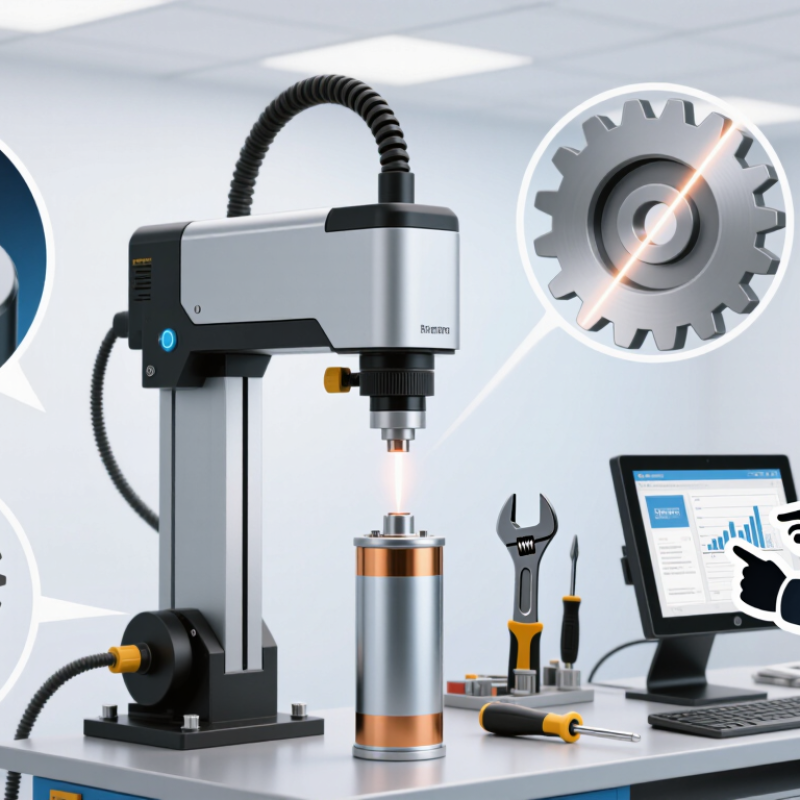
Inside the machine, a laser source sends light through optics to a focusing head. A fixture holds the parts in position while the beam follows a programmed path. Power, pulse duration, focus, and travel speed shape the weld. For example, a copper tab and an aluminum terminal may need different settings because they absorb and conduct heat differently. Too little energy can leave a weak joint; too much can cause spatter or damage nearby material. Small setup changes matter.

Operators may monitor the seam with cameras or sensors and inspect sample joints for consistency. These checks help catch variation, though they cannot make every weld perfect. A practical setup also considers part fit, fume extraction, shielding, and access for maintenance. A neat-looking seam is not proof of a reliable connection. Testing the joint is essential.

Which Battery Welding Requirements Should You Identify First?

How to Choose the Best Battery Laser Welder?

Which Battery Welding Requirements Should You Identify First?

Start with the cell, tab, and joint—not the machine’s headline power. Record the materials, thicknesses, coating, and joint geometry. A copper-to-aluminum connection behaves differently from two nickel-plated steel tabs. Note whether the weld is a lap joint, seam, or stack of thin layers. Then define acceptable weld strength, electrical resistance, appearance, and leak or burn-through limits. These details guide trials and inspection. They also prevent a fast weld from becoming an expensive reject.

Production volume matters. The International Energy Agency’s Global EV Outlook 2024 reports nearly 14 million electric cars were sold in 2023, about 18% of global car sales. That figure signals a large and growing battery market, but it does not specify your line’s needs. Estimate daily output, changeover frequency, and available cycle time. Decide whether operators need recipe storage, automated vision checks, or traceable weld records. Consider fixtures, fume extraction, shielding gas, and service access too. Small setup gaps can disrupt an otherwise capable process.

Tips: Bring actual production samples to supplier trials. Ask for cross-sections, pull-test results, and resistance measurements—not just a bright weld photo. Test the thinnest and thickest parts. Check for spatter, discoloration, and distortion. A checklist can still miss an awkward fixture or cable route; inspect the proposed cell layout before purchase.

How Do Power, Precision, and Compatibility Affect Your Choice?

Power, precision, and compatibility determine whether a battery laser welder suits your actual work. A high power rating can help with thicker material, but it may be excessive for thin sheet, where heat can distort edges. Match the welder’s stated capacity to the metal type and thickness you expect to join. Then check duty cycle and battery runtime, not just peak output. That matters. A tool that runs out during repeated welds can slow a small repair job. It is tempting to choose the strongest model, but I would pause and compare it with the workbench’s real needs.

Precision comes from controllable settings, a stable beam, and a focus that fits the joint. Look for clear adjustment ranges and test guidance for different materials; tiny seams need different handling than wider joints. Compatibility also includes battery voltage, pack availability, charger type, and replacement parts. Check the fit. Confirm that the battery system supports the expected workload and that the machine includes appropriate safety features and operating instructions. In a shared workshop, fume extraction and suitable laser protection matter too. A specification sheet cannot show how comfortable the tool feels after an hour. If possible, inspect a sample weld or arrange a supervised test before deciding.

What Safety and Maintenance Features Should You Evaluate?

When choosing a battery laser welder, inspect its safety controls before comparing power or speed. A covered work area, secure access interlocks, and a reachable emergency stop help limit exposure if a setup shifts. Check that the supplied protective eyewear matches the laser’s specified wavelength and operating conditions. Do not assume ordinary shop glasses are enough. Small details matter.

Battery protection deserves equal attention. Look for clear charge-status and temperature warnings, plus protection against overheating and electrical faults. The pack should sit firmly in its bay, without damaged cables or loose connectors. If the machine feels unusually hot or shows an error, stop and follow the manufacturer’s service instructions rather than continuing a weld. A spec sheet can sound reassuring; real controls and clear manuals matter more.

Maintenance features affect safety over time. Ask how to inspect the protective window, clean the lens, and replace dust or fume filters. Access should be straightforward, but optical parts should not require casual handling. Check whether cooling vents are easy to clear and whether the unit indicates a cooling fault. Keep a simple log of cleaning, warning messages, and battery condition. I would not judge upkeep by convenience alone: an easy-to-open panel is useful only if the instructions explain what can safely be serviced by the operator.

How to Choose the Best Battery Laser Welder? - What Safety and Maintenance Features Should You Evaluate?

Evaluation area Feature to evaluate What to check Evidence or practical test Priority
Laser enclosure Beam containment and access control Confirm the enclosure is designed for the laser’s wavelength and output, and that access doors prevent laser operation when open. Review the laser safety documentation and test the door interlock using the manufacturer’s procedure. Essential
Emergency controls Emergency stop and safe shutdown Check that the emergency stop is easy to reach and that the machine’s response to activation is clearly documented. Verify the stop function during commissioning and confirm how the system is reset safely. Essential
Operator protection Laser eyewear and warning labels If eyewear is required for the setup, its wavelength range and optical density must match the hazard assessment and applicable rules. Eyewear does not replace a properly enclosed system. Check eyewear markings, condition, and the machine’s laser classification and warning labels. Essential
Battery-work safeguards Cell handling, fixturing, and isolation procedures Look for clear procedures for positioning cells or packs, preventing unintended shorts, and managing damaged or abnormal cells. Battery hazards depend on cell chemistry and state of charge. Review the work instructions and confirm that fixtures hold parts securely without damaging cells or insulation. Essential
Fire and thermal risk Risk controls for heat, sparks, and battery incidents Assess the process for hot workpieces, ignition sources, and possible cell failure. Use site-specific emergency procedures and suitable fire-response arrangements. Review the risk assessment, emergency plan, and operator training records for the battery chemistry being processed. Essential
Fume management Local exhaust ventilation and filtration Determine whether the materials and process generate fumes or particles, and whether extraction is needed. Filtration requirements depend on the materials and system design. Check airflow or filter-status indicators, service intervals, and the recommended filter type. High
Process control Parameter control and recipe protection Evaluate controls for laser power, pulse or weld settings, and repeatable recipes. Check whether access permissions can reduce unintended setting changes. Run a representative sample weld and confirm that approved settings can be saved, recalled, and documented. High
Cooling system Cooling alarms and routine checks For water-cooled equipment, check temperature and flow monitoring, alarm behavior, coolant specifications, and leak inspection requirements. Air-cooled systems have different service needs. Review the maintenance schedule and confirm that coolant checks and alarm tests are included where applicable. High
Optics and beam path Protective windows and inspection access Check how optical surfaces are protected from spatter and contamination, and whether inspection or replacement can be performed using a safe, documented procedure. Inspect the protective window and ask for cleaning methods, replacement intervals, and approved consumables. High
Electrical safety Grounding, cables, and service isolation Check grounding instructions, cable condition, electrical ratings, and isolation procedures for servicing. Follow applicable electrical safety requirements at the installation site. Inspect cables and connectors, and confirm that maintenance staff have access to the correct isolation instructions. Essential
Maintenance support Service access, diagnostics, and spare parts Evaluate whether routine service tasks are clearly documented and whether essential consumables and replacement parts are available within a practical timeframe. Review the maintenance manual, service intervals, diagnostic messages, and parts list before purchase. Medium–High
Records and training Operator training and maintenance logs Confirm that operators can be trained on safe operation, setup, cleaning, fault response, and battery-specific hazards, with maintenance activities recorded. Check the training materials, logbook or digital record functions, and procedures for reporting faults. High

Evaluate each machine against its intended materials, production setup, manufacturer instructions, and applicable local safety requirements. A feature list alone does not replace a site-specific risk assessment.

How Can You Compare Models and Select the Right Welder?

Comparing battery laser welders starts with the cells and joints you actually make. Check the battery chemistry, tab material, and thickness range in each model’s specifications. A unit suited to thin nickel tabs may not handle thicker copper connections consistently. Review pulse energy, spot size, and adjustment range, then request sample welds using your materials. Numbers alone can mislead.

Look beyond maximum output. Compare repeatability, cooling requirements, control options, and display clarity. For a small workshop, footprint and extraction needs matter; production teams may prioritize duty cycle and service access. Check for training, maintenance guidance, and realistic test data. More power is not automatically better. Thin tabs can deform or burn through, and a neat surface bead does not prove a strong joint.

Tips: Ask for weld samples using your exact cell and tab combination. Inspect both sides, pull-test several joints, and record settings. Compare total cost, including fixtures, ventilation, training, and upkeep. Test first. If results vary, review fit-up before increasing energy.