How to Choose Stainless Steel Resistance Screws for Your Projects?
Choosing the right stainless steel resistance screw for your projects can be crucial. These screws are designed to withstand harsh environments and provide long-lasting durability. With various types available, making an informed choice is essential to ensure optimal performance.
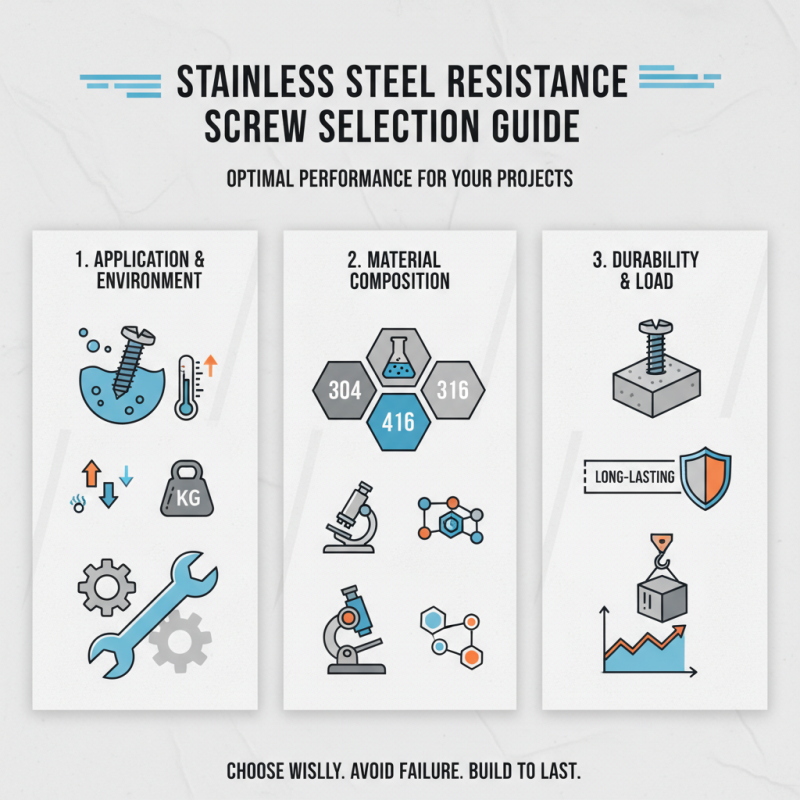
When selecting a stainless steel resistance screw, consider the specific application. Different projects may require screws that can handle corrosion, temperature changes, or heavy loads. It's important to understand the environment where these screws will be used. Otherwise, you may face premature failure or costly replacements.
The material composition of the screw plays a vital role in its effectiveness. Stainless steel comes in various grades, each with unique properties. A poor choice here can lead to weakened connections. Reflect on the potential impacts of your selection. Each project demands careful consideration and expertise to achieve the desired outcomes with stainless steel resistance screws.
Understanding Stainless Steel Resistance Screws and Their Applications
Stainless steel resistance screws are essential in many applications due to their durability and corrosion resistance. These screws are composed of a combination of iron, chromium, and nickel, leading to excellent mechanical properties. According to a recent industry report, stainless steel screws account for about 30% of the fasteners market. This growth is attributed to increasing demand in construction and automotive industries.
It's critical to understand the specific applications for these screws. In marine environments, for example, they offer significant resistance to saltwater corrosion. In structural projects, the strength-to-weight ratio is vital. Choosing the right type often depends on the project’s requirements. The tensile strength of stainless steel 304 and 316 screws can differ, affecting their performance under stress.
Tips: When selecting resistance screws, consider factors like load requirements and environmental exposure. Regularly check compatibility with other materials to avoid galvanic corrosion. It's also helpful to stay updated on industry standards for quality assurance, as these can ensure the longevity of your projects. Remember, the choice of screw might seem minor, but it can greatly impact project outcomes. Small errors in selection can lead to larger, costly issues down the road.
Key Factors to Consider When Selecting Stainless Steel Resistance Screws
Choosing stainless steel resistance screws requires careful consideration of various factors. One crucial aspect is corrosion resistance. Stainless steel offers high resistance due to its chromium content, which forms a protective layer. However, not all stainless steel grades provide the same level of resistance. According to a report by the Specialty Steel Industry of North America, grades like 316 outperform others in marine environments.
Another significant factor is tensile strength. The tensile strength of stainless steel screws can vary significantly by grade. For instance, a study by ASTM International indicates that 304 stainless steel screws typically have lower tensile strength compared to 410-grade screws. This can directly impact the performance of your projects, especially in high-stress applications.
Additionally, thread design plays a vital role in performance. Fine threads grip better but are less tolerant to misalignment. In contrast, coarse threads may allow for easier assembly but can be prone to stripping under heavy loads. Balancing these characteristics is essential for optimizing your choice of screws. Each project may bring unique challenges that require you to reflect on your specific needs and conditions to make the best decision.
Different Types of Stainless Steel Resistance Screws and Their Properties
When selecting stainless steel resistance screws for projects, understanding their types and properties is crucial. Stainless steel screws come in several grades, with A2 and A4 being the most common. A2 screws are suitable for indoor applications. They exhibit good corrosion resistance but may not withstand harsh environments. In contrast, A4 screws, also known as marine-grade, provide enhanced protection against corrosion, making them ideal for coastal areas.
Tips: Always consider the environment where the screws will be used. Harsh conditions demand a higher-grade material.
Another significant factor is the thread type. Coarse threads grip better in softer materials, while fine threads are ideal for harder substrates. Recent industry reports indicate that nearly 40% of installation failures stem from incorrect screw selection. A common mistake is choosing the wrong thread type, leading to stripping or inadequate fastening.
Tips: Test different thread types during projects. This will help identify what works best for your specific needs.
Finally, paying attention to head styles is essential. Common styles include pan, flat, and hex heads. Each offers different benefits in terms of torque and ease of installation. The wrong choice could create challenges during assembly. Insufficient knowledge in this area can lead to frustrations and project delays. Understanding these properties can lead to more efficient and reliable outcomes in your work.
Stainless Steel Resistance Screws Comparison
Tips for Choosing the Right Size and Thread Pitch for Your Project
Choosing the right size and thread pitch for stainless steel resistance screws is crucial for any project. The screw's diameter and thread pitch significantly impact its strength and compatibility with materials. According to industry data, using the correct thread pitch can enhance load distribution, reducing the risk of mechanical failure. A mismatch can lead to stripping or inadequate fastening, which ultimately compromises project integrity.
When determining the size, consider the application. For light-duty projects, smaller diameter screws may suffice, while heavy-duty tasks require larger diameters. A report from the Fastener Quality Act indicates that a screw with an incorrect diameter can lose up to 30% of its holding power. This detail is vital for anyone relying on fasteners for structural stability.
Thread pitch, the distance between threads, also plays a key role. Coarser threads provide better tension and are ideal for materials like wood. In contrast, finer threads are better for metal, allowing for greater tension and grip. Keep in mind that not every project matches standard sizes. Custom screws might be necessary, which can incur additional costs and delays. Always verify specifications before making a choice; a small oversight can lead to significant project setbacks.
Maintenance and Care for Stainless Steel Resistance Screws in Use
Stainless steel resistance screws are known for their durability and corrosion resistance. However, proper maintenance is essential to maximize their lifespan. Regularly inspect these screws for signs of wear or corrosion. If you notice any discoloration, it’s time to take action. Cleaning the screws with a soft cloth and mild detergent can help remove dirt and grime.
Another key practice is to ensure that screws are not over-tightened. This can lead to stripping or threading issues, compromising the screw’s integrity. Consider using a torque wrench for precise measurements. Additionally, applying a protective lubricant can reduce friction and extend the screws' life, but be careful not to overdo it. It’s a balance between protection and cleanliness.
When stainless steel screws are in use, environmental factors play a critical role in their maintenance. In areas with high humidity or salt exposure, such as coastal regions, routine checks are even more important. If left unchecked, these screws may fail sooner than expected. Don’t overlook the small details. Maintenance is not just a task; it’s an ongoing commitment to your projects' success.
How to Choose Stainless Steel Resistance Screws for Your Projects? - Maintenance and Care for Stainless Steel Resistance Screws in Use
| Screw Type | Diameter (mm) | Length (mm) | Material Grade | Recommended Use | Maintenance Tips |
| Countersunk | 5 | 30 | A2 | Wood and Plastic | Regular cleaning to avoid grime buildup. |
| Pan Head | 6 | 40 | A4 | Marine Applications | Use silicone-based lubricants for longevity. |
| Hex Head | 8 | 50 | A2 | Construction and General Use | Check regularly for corrosion, especially in coastal areas. |
| Self-Drilling | 4 | 25 | A4 | Sheet Metal and Timber | Keep threads free of dirt for effective drilling. |