
×

How to Choose GRP Gutters Machinery for Global Buyers

Choosing Grp Gutters Machinery is not simply a price comparison. Global buyers must match equipment capability with local production realities, customer expectations, and long-term service access.

Daniel Hart, a composite manufacturing consultant with experience in pultrusion projects, says, “The best gutter machine is not the fastest machine; it is the one that repeats quality every day.” His view reflects a practical concern. A line may promise high output, yet unstable resin control can create weak corners, surface bubbles, or uneven wall thickness. Those defects become expensive after installation.

Buyers should examine the complete production system. Review the puller’s traction, die temperature control, cutting accuracy, curing arrangement, and profile changeover time. Ask for sample gutters made with the intended resin, glass reinforcement, and dimensions. Look closely at the edges. Check the drainage channel. Small flaws matter.

Supplier experience also deserves attention. Can the manufacturer provide commissioning support across borders? Are manuals clear? Can critical heaters, sensors, and cutting blades arrive quickly? These questions often matter more than an impressive brochure. Energy use, operator training, factory space, and maintenance costs should enter the calculation.

A lower purchase price can mislead.

The cheapest option may require frequent adjustments. It may also depend on one distant technician. That risk is easy to underestimate. Still, not every premium machine is automatically suitable. Buyers should challenge technical claims, request performance records, and compare total ownership costs. Reliable Grp Gutters Machinery should support stable profiles, predictable output, safe operation, and measurable quality. That standard is demanding, but global production rarely rewards vague decisions.
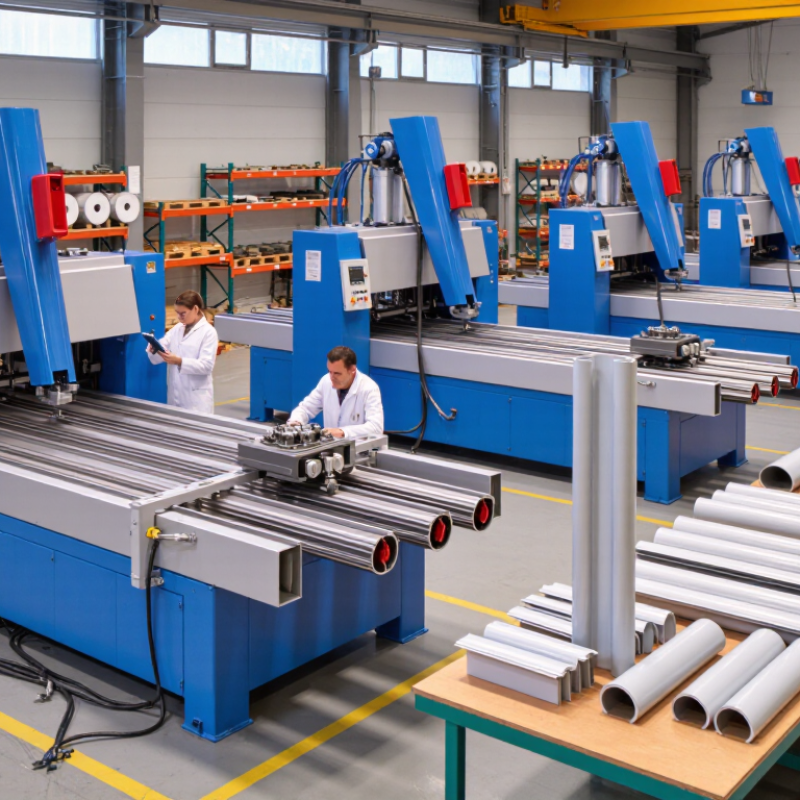
How to Choose GRP Gutters Machinery for Global Buyers

GRP Gutter Machinery: Definition, Purpose, and Main Applications

How to Choose GRP Gutters Machinery for Global Buyers

GRP gutter machinery produces gutters from glass-reinforced plastic, also called fiberglass-reinforced polymer. The equipment combines resin, glass fibers, heat, pressure, and controlled shaping. It may include feeding units, forming molds, curing sections, cutting tools, and inspection stations. GRP gutters are lightweight, corrosion-resistant, and suitable for demanding drainage environments.

The main purpose is consistent production. A reliable line keeps gutter dimensions stable across long production runs. It also reduces manual trimming and material waste. Common applications include factories, warehouses, agricultural buildings, residential projects, and infrastructure sites.

Chemical exposure and coastal air can challenge ordinary metal gutters. GRP systems often perform better in these conditions, but resin selection still matters. A poorly matched formula can cause brittleness, surface bubbles, or uneven curing.

Tips: Check mold compatibility, hourly output, power requirements, and operator controls before buying. Ask for sample gutters made with your intended resin and glass content. Confirm local voltage, spare-part availability, safety protection, and remote technical support. Experienced buyers also inspect cut edges and drainage joints, not only machine speed. A fast line is not always an efficient line. Sometimes, a simpler machine gives better results because workers can adjust it easily. I would also leave room for process testing; actual factory humidity may change curing performance.

Key Machine Types and Their Production Capabilities

How to Choose GRP Gutters Machinery for Global Buyers

Machine selection should begin with the gutter profile, not the supplier’s headline speed. Pultrusion systems suit continuous GRP channels and can maintain stable reinforcement alignment. Experienced operators commonly target 0.3–1.2 meters per minute, depending on resin, wall thickness, and curing length.

Filament winding machines fit round or customized drainage sections, but they may require extra trimming equipment. Compression molding systems support complex fittings, including corners and outlets. They usually provide better repeatability for short components.

The MarketsandMarkets Composites Market report forecasts strong sector growth through 2028, increasing pressure for flexible, scalable production lines.

A complete gutter line may include resin metering, roving racks, preforming, heating, pulling, cutting, drilling, and dimensional inspection. Automatic cutting reduces length variation, while calibrated pullers protect the surface from crushing.

Production capability must include more than hourly output. Buyers should check usable machine width, curing temperature control, changeover time, energy demand, and scrap rates.

A 600-meter daily claim may ignore setup and maintenance hours. That is a common mistake.

Data from JEC Observer’s composites industry analysis also highlights sustainability and process efficiency as growing purchasing factors.

Ask for trial samples using your actual glass content, resin system, and profile drawing. A machine can look impressive in a showroom, yet perform poorly with a thin, ribbed gutter.

Pilot testing remains essential.

How to Assess Materials, Capacity, and Technical Specifications

Choosing GRP gutters machinery starts with the material system, not the advertised output. Confirm compatibility with the selected resin, glass-fiber reinforcement, fillers, and curing agents. Resin viscosity affects impregnation, while fiber alignment influences gutter strength. Ask whether the machine supports the required profiles, wall thicknesses, and surface finishes.

Capacity figures need careful examination. A listed speed may reflect ideal conditions, not continuous production. Compare hourly output with actual mold changes, cleaning time, curing pauses, and rejected pieces. For export projects, calculate capacity against local labor, electricity stability, and warehouse space. A smaller line can be more reliable when operators are still gaining experience.

Technical specifications should include forming width, adjustable diameter, cutting tolerance, motor power, heating control, and PLC functions. Check the machine’s working temperature range and calibration method. Sensors should detect fiber breaks, resin shortages, and dimensional drift. Request test samples using your own material formula. This exposes problems early.

Do not overlook maintenance access. Operators need safe paths to inspect rollers, tanks, and cutting units. Spare parts should have clear specifications and realistic delivery times. I have seen buyers focus on speed and later struggle with uneven walls. That mistake is avoidable, though not always. Measurement records, trial reports, and operator training provide stronger evidence than sales promises.

How to Choose GRP Gutters Machinery for Global Buyers - How to Assess Materials, Capacity, and Technical Specifications

Evaluation Dimension Typical Requirement or Range What to Check Before Purchase Why It Matters for Global Buyers
Manufacturing Process Continuous pultrusion for standard GRP/FRP gutter profiles; molding or hand lay-up for special shapes Confirm whether the line includes resin impregnation, fiber guiding, preforming, heating, pulling, cutting, and profile support A complete production line reduces integration work and makes commissioning easier in different countries
Reinforcement Material E-glass continuous rovings, commonly combined with stitched or woven glass-fiber mats Request fiber areal weight, roving tex, glass content, supplier certificates, and compatibility with the selected resin system Fiber type and placement strongly affect tensile strength, stiffness, dimensional stability, and surface quality
Resin System Unsaturated polyester is common; vinyl ester is used when higher chemical or hydrolysis resistance is required Check resin viscosity, curing temperature, gel time, catalyst system, UV resistance, and local chemical regulations Resin selection influences corrosion resistance, weathering performance, production speed, and operating cost
Gutter Profile Range Typical drainage widths are approximately 100–300 mm, depending on the building application and tooling Verify usable profile width, wall thickness range, lip or flange geometry, tooling-change method, and maximum profile height The profile range determines whether one machine can serve residential, commercial, industrial, and infrastructure projects
Finished Wall Thickness Common GRP pultruded profiles are often produced around 2–8 mm; the design may require more Check thickness tolerance, reinforcement layout, resin-rich surface layer, and the machine’s ability to maintain uniformity Consistent thickness supports load capacity, drainage performance, installation accuracy, and material efficiency
Production Speed Approximately 0.3–2.0 m/min for many GRP pultrusion applications; actual speed depends on profile and resin curing Ask for tested speed using the intended fiber, resin, profile, and target wall thickness rather than an empty-line maximum A verified output rate provides a more reliable production and return-on-investment calculation
Pulling Capacity Typical small-to-medium profile lines may use approximately 10–60 kN of pulling force Confirm maximum pulling force, clamping method, traction length, speed control, and protection against profile slippage Adequate pulling force is essential for stable production of thicker or heavily reinforced profiles
Curing and Heating Electric heated dies with multiple independently controlled temperature zones are commonly used Check temperature range, zone quantity, sensor type, heating power, insulation, and over-temperature protection Accurate curing control reduces warpage, under-cure, resin degradation, and dimensional variation
Cutting System Automatic abrasive or diamond cutting for GRP; cut-length control commonly uses an encoder and programmable controller Verify cutting length range, tolerance, blade life, dust extraction, chip containment, and safe access to the cutting area Reliable cutting improves installation efficiency and reduces waste and worker exposure to glass-fiber dust
Dimensional Accuracy Target tolerances should be agreed in advance; many projects specify profile dimensions within approximately ±1–2 mm Request trial-production measurements for width, height, wall thickness, straightness, and cut length Accurate profiles fit brackets, joints, outlets, and covers with fewer adjustments on site
Installed Electrical Power Approximately 15–80 kW for many small-to-medium pultrusion lines, excluding optional auxiliary systems Obtain a complete load list covering heaters, drives, pumps, controls, extraction, cooling, and standby equipment Power compatibility varies by country and affects transformer sizing, operating cost, and factory preparation
Electrical Supply Common industrial configurations include three-phase 380–415 V, 50 Hz; other voltage and frequency options may be required Specify the destination country’s voltage, frequency, phase system, short-circuit rating, and control-voltage requirements Correct electrical design prevents delays, unsafe operation, and costly modification after delivery
Controls and Data PLC-based control with touch-screen monitoring for speed, temperature, pulling force, alarms, and cut length Check recipe storage, multilingual interface, alarm history, data export, remote diagnostics, and manual override functions Clear data and diagnostics simplify operator training, troubleshooting, quality audits, and production reporting
Tooling and Changeover Dedicated forming and curing dies are normally required for each profile family Evaluate die material, surface finish, heating layout, expected service life, storage requirements, and changeover time Tooling cost and changeover time can determine whether multi-profile production is commercially practical
Safety and Environmental Controls Guarding, emergency stops, interlocks, resin-spill control, ventilation, and GRP dust extraction should be included Request a risk assessment, safety-circuit description, extraction airflow data, and documentation for the destination market Controls exposure to resin vapors and glass-fiber dust while supporting workplace and machinery compliance
Quality Verification Test samples should be checked for dimensions, fiber distribution, cure state, surface defects, and mechanical properties Define factory acceptance tests, sample quantity, inspection tools, acceptance tolerances, and documentation before shipment Pre-shipment verification reduces disputes and confirms that the line can produce the specified gutter profile
Documentation and Support Installation drawings, electrical schematics, manuals, spare-parts lists, lubrication schedules, and training materials Confirm documentation language, spare-parts availability, response time, commissioning scope, and online or on-site service options Strong technical support shortens downtime and helps local operators maintain consistent output
Selection note: The ranges shown are indicative values commonly used for small-to-medium GRP pultrusion applications. Final specifications should be confirmed through a production trial using the buyer’s actual resin, reinforcement, profile design, wall thickness, and electrical conditions.

Choosing Machinery for Local Standards, Budgets, and Factory Conditions

Choosing GRP gutter machinery starts with local standards, not catalog features. Each market may require different gutter dimensions, drainage profiles, fire performance, and electrical protection. Confirm these requirements before discussing output capacity. A machine designed for one region may produce unsuitable profiles elsewhere.

Factory conditions matter just as much. Measure workshop height, floor strength, doorway width, and available power. GRP production also needs controlled ventilation, resin storage, and safe worker access. In a humid coastal area, curing times may change. Temperature can affect surface quality and dimensional stability. Choose machinery with adjustable curing controls and accessible maintenance points. Operators should understand the process, not only press buttons.

Budget planning needs more honesty. A cheaper machine can create higher costs through waste, downtime, or difficult mold changes. I have seen buyers underestimate installation space and later pay for costly factory adjustments. That mistake is avoidable, but not always obvious. Request sample production using your intended resin, reinforcement, and gutter profile. Check cycle time, edge finish, material usage, and cleaning effort. Do not judge equipment from speed alone.

Tips: Compare total ownership costs, including molds, training, ventilation, spare parts, and energy. Ask for documented safety procedures and local electrical compatibility. Leave room for future profiles. Growth is rarely perfectly planned.

Installation, Operation, Maintenance, and Supplier Evaluation

How to Choose GRP Gutters Machinery for Global Buyers

Installation starts with the gutter profile, resin system, and required wall thickness. Confirm these parameters before selecting a pultrusion or winding machine. A practical factory trial should produce straight sections without visible voids, dry spots, or uneven glass alignment. Keep the machine level, and check die temperature at several points. Small temperature differences can change surface quality.

During operation, line speed must match resin curing and reinforcement tension. Operators should record speed, temperature, pull force, and scrap weight each shift. This creates useful evidence, not assumptions. The International Energy Agency reported that buildings consumed about 30% of global final energy in 2022. Efficient machinery therefore matters beyond production cost. Servo drives, controlled heating, and automatic alarms can reduce unnecessary energy use, although real savings depend on factory conditions.

Maintenance needs a clear rhythm. Clean resin residue daily, inspect rollers weekly, and verify sensor calibration monthly. Replace worn dies before dimensional errors become customer complaints. One weakness remains common: buyers often compare only motor power and price. That is not enough. Evaluate supplier response time, spare-parts availability, operator training, and documented test results. Ask for references using similar GRP profiles and export conditions. The 2024 Grand View Research Fiberglass Market report estimated the global market at approximately USD 16.7 billion in 2023, showing strong material demand. Yet market growth does not guarantee reliable equipment. A supplier should explain limitations openly, including setup losses and expected maintenance hours.

How to Choose GRP Gutters Machinery for Global Buyers

Recommended procurement weighting for installation readiness, operational performance, maintenance planning, and supplier evaluation. The scores represent a practical 100-point buyer assessment framework and should be verified against the project specification and supplier documentation.

Supplier evaluation receives the highest weighting because international buyers must confirm technical documentation, spare-parts support, operator training, warranty terms, installation assistance, and long-term service capability before placing an order.