
×

How to Choose Dispensary Display Cases for Your Store?

Choosing the right dispensary display cases can shape how customers see your store, products, and professionalism. A beautiful case is not enough. It must protect merchandise, support clear browsing, and fit the daily rhythm of your staff. Customers notice small details, including fingerprints on glass, harsh lighting, and crowded shelves.

Retail fixture consultant James O. Hill offers a useful reminder: “Security should support the shopping experience, not dominate it.” This principle deserves attention. Strong locks, laminated glass, stable hinges, and discreet alarm connections can improve security without creating an unwelcoming atmosphere. The best dispensary display cases make products easy to view while keeping staff control simple and reliable.

Begin with the store’s physical reality. Measure doorways, wall depth, customer pathways, and counter height. A case that fits a drawing may block movement after installation. Consider tempered or laminated glass, adjustable shelves, low-heat LED lighting, and surfaces that withstand frequent cleaning. Check whether customers can view labels comfortably from different heights. Accessibility matters too. So does staff efficiency.

There is no perfect case for every store. A compact shop may need vertical units, while a larger location may benefit from island displays. Budget decisions can also be uncomfortable. The cheapest case may create replacement costs later. I have learned that attractive hardware can still disappoint when hinges loosen or lighting fails. That possibility deserves honest review.

This guide explains how to compare materials, security features, layout options, maintenance needs, and long-term value before choosing your dispensary display cases.
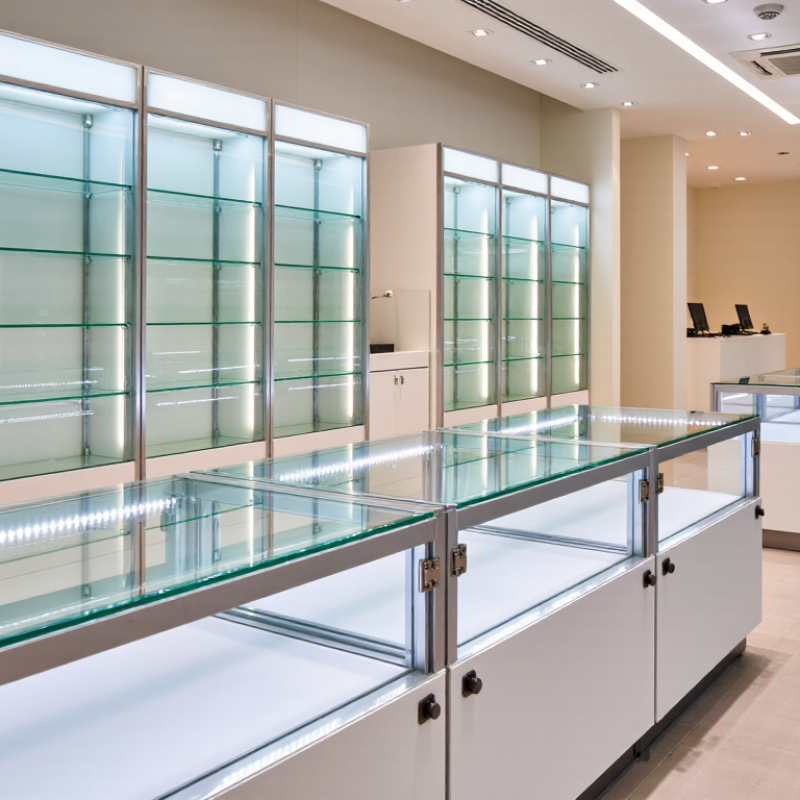
How to Choose Dispensary Display Cases for Your Store?

Understand Your Store’s Display and Product Requirements

Choosing a dispensary display case starts with understanding what your store must present, protect, and explain. Measure each product package before ordering fixtures. Small containers need adjustable shelves, while boxed items may require deeper compartments. Leave space between products. Crowded shelves make labels difficult to read.

A secure case should offer clear tempered glass, reliable locks, and controlled access for staff. Check whether its hinges, lighting, and shelf supports can handle daily use. LED lighting can improve visibility, but excessive heat may affect sensitive products. Ask your supplier about temperature limits and maintenance requirements. Local regulations may also influence case height, product visibility, signage, and customer access. Confirm these details with the relevant authority before installation.

Your display should support accurate stock control. Consider removable trays, visible product codes, and enough room for inspection without disturbing nearby items.

I once underestimated the value of a low shelf. Customers had to bend awkwardly, and staff missed damaged packaging. That mistake changed my layout decisions. Small details matter.

Keep high-value products in monitored sections, away from direct entrances and blind corners. Use simple labels with product type, size, ingredients, and required warnings. Avoid decorative features that block essential information. A case can look impressive and still perform poorly. Review the layout during busy hours, not only when the store is quiet. That is when practical weaknesses appear.

Compare Dispensary Display Case Types and Configurations

When comparing dispensary display case types, start with customer movement, not appearance. Visibility matters. Wall-mounted cases save floor space and create clear sightlines across narrow aisles. Freestanding cases hold more inventory but can interrupt traffic flow. Countertop units support close consultation, although they may crowd payment areas. Modular configurations offer flexibility when product ranges change. That sounds efficient, but unused modules can make a store feel unfinished.

Security also differs by configuration. The National Retail Federation’s 2023 National Retail Security Survey reported average retail inventory shrink of 1.6% of sales in 2022. A lockable glass case, controlled-access drawer, and discreet anchoring can reduce handling risks without making the space feel defensive. Tempered glass improves durability, while rounded edges support safer customer movement. Do not rely on locks alone. Staff sightlines, daily counts, and clear opening procedures matter just as much. An attractive case can still fail operationally.

Lighting changes the comparison. The U.S. Department of Energy reports that LED lighting uses at least 75% less energy than incandescent lighting. It can also last up to 25 times longer. Use adjustable, low-heat LEDs to prevent glare and uneven color. Measure brightness at the product level, not only from standing height. I have seen well-built cases underperform because bright ceiling lights washed out their interiors. Confirm accessibility, fire, electrical, and security requirements with qualified professionals before installation. Perfect configurations rarely exist; testing one section first may reveal expensive mistakes.

How to Choose Dispensary Display Cases for Your Store?

Compare common dispensary display case types by typical product capacity and retail footprint. Use countertop and wall-mounted cases for compact layouts, while freestanding and island configurations provide greater merchandising capacity.

Planning note: Capacity refers to approximate sellable SKU positions, while footprint represents the floor area typically required by each configuration. Actual capacity varies with shelf spacing, product packaging, security hardware, and local accessibility requirements.

Evaluate Security, Visibility, and Access Features

Choosing dispensary display cases requires more than attractive glass and polished hardware. Security, visibility, and controlled access must work together. The National Retail Federation’s 2023 National Retail Security Survey reported an average retail shrink rate of 1.44% of sales in 2022. That figure supports using anchored cases, laminated glass, concealed hinges, and locks designed for frequent staff use. A case should resist forced entry without making daily service exhausting.

Visibility matters just as much. Loss Prevention Research Council guidance consistently promotes clear sightlines, layered security, and camera-friendly layouts. Avoid tall cabinets that create blind corners. Use adjustable lighting, low visual barriers, and transparent panels that reduce reflections. Staff should see product compartments from the service position. Customers should see the display clearly, too. Small details matter.

Access controls need careful testing. A two-person opening process may improve accountability, but it can slow busy periods. Electronic locks can record access events, although batteries and software require maintenance. Place frequently requested items near the counter, while keeping higher-risk inventory in restricted compartments. The Occupational Safety and Health Administration recommends keeping walkways clear and reducing workplace hazards; oversized cases can undermine both goals. A practical mistake is choosing maximum security first. If employees struggle with the case, shortcuts may follow. Test the display during a simulated rush, not only during installation.

Select Suitable Materials, Lighting, and Interior Layouts

Choosing dispensary display cases requires more than attractive glass and polished hardware. Materials should support hygiene, security, and daily maintenance. Tempered glass offers visibility and impact resistance, while powder-coated steel creates a durable frame. Solid-surface shelves are easier to clean than porous wood. In a busy store, fingerprints appear quickly. That detail matters.

Lighting and interior layout shape how customers read the space. The U.S. Department of Energy reports that LED lighting uses at least 75% less energy and can last up to 25 times longer than incandescent lighting. Use dimmable LEDs with a color rendering index of 80 or higher, consistent with guidance in the ENERGY STAR Retail Lighting Guide. Neutral white light around 3500K to 4000K can reveal package colors without making the room feel clinical. Keep vertical cases near walls, then leave clear sightlines toward service areas. Aisles should feel open, not crowded. My own design preference can sometimes overvalue symmetry; customer movement should win instead.

Tips: Test one case under actual store lighting before ordering all units. Check reflections at standing height. Place high-interest displays around eye level, but avoid blocking staff visibility. Add concealed cable routes and adjustable shelves. Review the layout after two weeks of real traffic, because a drawing cannot predict every hesitation or awkward turn.

Plan the Budget, Installation, and Ongoing Maintenance

Choosing a dispensary display case starts with a realistic budget, not a showroom image. Measure wall lengths, customer flow, counter height, and available power points. A secure, well-lit case may cost more than expected, especially when tempered glass, locks, lighting, and delivery are included. Leave 10 to 15 percent for surprises. My first estimate was too optimistic. Freight and small fitting changes quickly consumed the allowance.

Installation should be planned before ordering. Confirm floor strength, doorway width, elevator access, and clearance for staff movement. Ask an experienced installer for a written site check and a simple timeline. Cases need stable placement and safe cable management. Poor alignment can create sharp gaps, uneven doors, or difficult cleaning areas. Check local accessibility, fire safety, and retail security requirements with qualified professionals. Do not treat a display case as furniture. It affects daily operations.

Ongoing maintenance belongs in the original budget. Build a monthly schedule for glass cleaning, lock testing, light inspection, hinge adjustment, and surface checks. Use approved care methods, but keep records in a shared log. Dust around vents can shorten equipment life. Replace damaged hardware promptly. Train each shift to report loose handles or flickering lights. Small faults become expensive. Review the case after several weeks of real use. You may discover that the best-looking layout slows restocking or blocks sightlines. Adjust it.

How to Choose Dispensary Display Cases for Your Store? - Plan the Budget, Installation, and Ongoing Maintenance
Planning Dimension Recommended Specification Typical Planning Data Budget / Installation Impact Maintenance and Compliance Notes
Store Footprint Measure wall length, aisle width, ceiling height, doorways, and emergency routes before selecting a case. Reserve a clear customer path of at least 36 inches where local accessibility rules require it. Accurate measurements reduce delivery, rework, and relocation costs. Keep fire exits, electrical panels, sprinklers, and accessible routes unobstructed.
Display Case Type Choose from wall-mounted, freestanding, countertop, or lockable glass cases according to product mix and available space. Wall-mounted cases maximize floor space; freestanding cases provide better visibility from multiple directions. Freestanding units usually require more floor area and may need anchoring; wall-mounted units require suitable wall structure. Confirm that the selected format supports secure locking and easy staff access.
Capacity Planning Size the case for current inventory plus moderate growth rather than filling every shelf. Plan approximately 70–85% shelf utilization to maintain visibility and allow product rotation. Oversized cases increase purchase, delivery, lighting, and cleaning costs. Leave enough space for labels, price cards, and safe staff handling.
Construction Materials Use tempered safety glass with a durable metal, laminate, or solid-surface frame. Tempered glass is stronger than ordinary annealed glass and is designed to break into smaller granular pieces if fractured. Glass thickness, frame finish, shelving, and hardware significantly affect the purchase price. Inspect glass, hinges, handles, shelf supports, and frame joints regularly for damage or looseness.
Security Features Specify lockable doors, controlled key access, anti-pry hardware, and anchoring where appropriate. Use a separate key or access record for each case group and restrict access to authorized employees. Locks, reinforced frames, alarms, and anchoring add upfront cost but reduce loss and replacement risk. Check locks and door alignment monthly; replace damaged hardware immediately.
Lighting Use low-heat LED lighting with concealed wiring and even shelf illumination. LED systems generally use less energy and produce less heat than traditional halogen lighting. Include drivers, switches, wiring, and electrical labor in the installation budget. Clean lenses and inspect wiring periodically; avoid glare that makes labels difficult to read.
Initial Budget Build a total-cost estimate covering the case, shelves, locks, lighting, delivery, assembly, and taxes. A practical planning range for a commercial display case is approximately $800–$4,000 per unit, depending on size, materials, security, and lighting. Request itemized quotations so installation and delivery are not hidden in the product price. Set aside a contingency of about 10–15% for site preparation, electrical changes, or damaged parts.
Installation Confirm floor loading, wall structure, anchoring points, power access, and delivery access before ordering. Allow approximately 2–6 hours for installation of a standard commercial unit, excluding major electrical or construction work. Complex wall reinforcement, new circuits, or difficult delivery routes can increase labor costs. Complete a final stability, lock, lighting, and door-operation check before opening the store.
Product Visibility Use adjustable shelves, clear sightlines, consistent spacing, and readable product information. Keep frequently requested items between approximately 36 and 54 inches above the finished floor when practical. Adjustable shelving reduces the need to replace the case when product sizes change. Avoid overcrowding, blocked labels, and reflective lighting that reduces product visibility.
Cleaning Routine Use a daily spot-cleaning schedule and a more detailed weekly cleaning checklist. Clean high-touch areas daily; clean glass with a non-abrasive product and a soft, lint-free cloth. Routine cleaning has low direct cost but requires assigned labor time and approved supplies. Do not use abrasive pads, harsh solvents, or excess liquid near locks, lights, and electrical components.
Preventive Maintenance Inspect hardware, shelves, locks, seals, lighting, and anchoring on a scheduled basis. Conduct a documented monthly inspection and replace worn parts before failure. Preventive service is usually less expensive than emergency repair or replacement. Record inspection dates, defects, corrective actions, and the employee responsible.
Replacement Planning Choose modular components that can be repaired or replaced individually. Budget for periodic replacement of LED drivers, locks, shelf supports, and door hardware as they wear. Standardized parts simplify inventory management and reduce downtime. Keep spare keys, shelf supports, and basic cleaning supplies in a controlled storage area.
Safety and Accessibility Verify that the design meets applicable building, fire, electrical, workplace-safety, and accessibility requirements. Requirements vary by location, occupancy type, and installation method; obtain local approval where required. Compliance changes may affect case placement, electrical work, anchoring, and final inspection costs. Use local regulations and qualified professionals as the final authority before installation.
Ownership Cost Evaluate purchase price together with energy, cleaning, repairs, replacement parts, and staff time. Compare at least a 3–5 year ownership period instead of selecting only by lowest initial price. Durable materials and accessible components may cost more initially but can reduce long-term operating costs. Review performance quarterly and adjust the maintenance schedule based on actual wear and usage.