
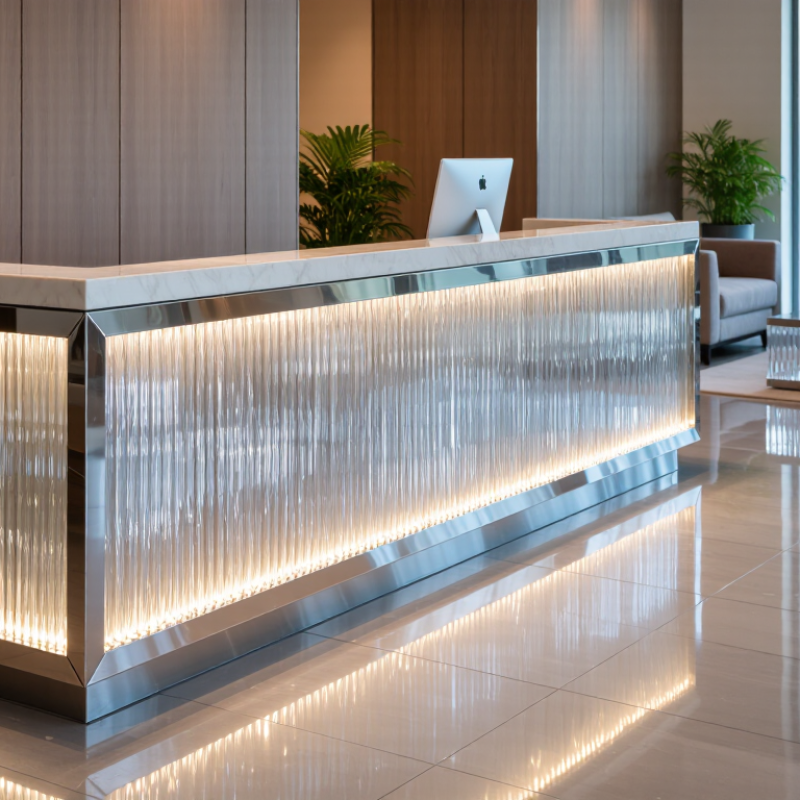
Choosing Crystal Furniture for a business is about more than creating a polished first impression. The right pieces should suit your brand, daily operations, and available space. A crystal-accented reception desk may catch the light beautifully, but it also needs a stable frame and a surface that staff can clean easily. Small details matter.
Before comparing styles, consider who will use the furniture and how often. A busy hotel lobby has different needs from a private showroom or executive office. Check dimensions, weight limits, edge finishes, assembly requirements, and care instructions. Ask suppliers what materials are used, how components are secured, and whether replacement parts or a warranty are available. If possible, review a sample in the room’s actual lighting. Crystal finishes can look warmer or cooler than expected.
Budget deserves an honest look, too. The lowest price may not reflect long-term upkeep, while an expensive statement piece may not earn its floor space. Not always. Think about cleaning time, expected wear, delivery access, and how the piece fits with existing furniture. Some choices will still involve trade-offs; that is worth admitting. This guide explores practical ways to compare design, safety, durability, and value, so you can choose Crystal Furniture that feels distinctive without making everyday business harder.
Define Your Business Needs and Intended Furniture Use
Start with the task. A crystal reception table may create a polished first impression, but it must also handle visitor traffic, bags, and frequent cleaning. For a private consultation room, a smaller crystal-accented side table may be enough. List who will use each piece, how often, and what it must hold before comparing finishes or shapes.
Think about daily wear, not just appearance. In a busy lounge, exposed edges and narrow bases may be vulnerable to bumps. In a display area, stable placement and clear sightlines may matter more than storage. The U.S. Bureau of Labor Statistics reported 2.4 cases of nonfatal workplace injury or illness per 100 full-time workers in private industry in 2023. This figure does not link injuries to furniture, but it supports careful attention to access, stability, and routine handling.
Measure the actual space. Leave room for chairs to move and staff to clean around table legs. Confirm the intended load with the supplier, and check whether the surface suits your cleaning products. Small details matter. A glossy top can show fingerprints under bright reception lighting. Crystal furniture can also feel too formal in a relaxed setting. That trade-off is easy to miss on a showroom floor. Assess a sample in your own lighting before committing to multiple pieces.
The word “crystal” can describe different materials, so confirm exactly what a supplier means. Lead-free crystal glass offers clear sparkle for handles, panels, or display details. It should not automatically be treated as a load-bearing surface. For tabletops, ask whether the glass is tempered or laminated and request specifications for thickness and intended loads. Acrylic can reduce weight, but it may scratch more easily.
Construction matters as much as appearance. Check how panels meet the frame: mechanical fasteners, carefully designed supports, or adhesive joints each need suitable materials and workmanship. Ask for close-up photos of edges, corners, and connection points. A polished edge should feel smooth, with no chips or sharp transitions. Small flaws matter. For a busy reception desk, protected corners and stable feet can help reduce damage from bags, cleaning carts, and repeated contact.
Request test documentation relevant to the furniture’s use, plus care instructions for the actual finish. Cleaning chemicals that are safe for a metal frame may cloud acrylic or damage a coating. Have a qualified furniture or structural professional review unusual spans, heavy loads, and wall-mounted pieces. Specifications can look reassuring on paper; I would still inspect a sample joint before approving a large order. Not every sparkle lasts.
Crystal furniture can make a reception desk feel brighter, but shine also magnifies clutter and fingerprints. Match its visual weight to the room: a clear acrylic or glass table keeps a compact waiting area open, while a crystal-accented console can anchor a larger lobby. Measure doorways, turning space, and the path between seats before ordering. The U.S. Access Board’s ADA Standards specify a 36-inch minimum clear width for accessible routes; verify the full layout with a qualified designer, since furniture legs and queue lines can reduce usable space.
Scale matters. Gensler’s 2024 Global Workplace Survey gathered responses from 16,000 workers across 15 countries, underscoring how varied workplace needs can be. For a business, that means choosing pieces around actual use: a low, sturdy side table for a lounge, or a slim display cabinet where customers need clear sightlines. Compare finishes under your own lighting. Crystal can look warm beside brass, yet stark under cool LEDs. A sample helps. It is not foolproof; reflections change across the day.
Tips: Tape the furniture footprint on the floor, then walk the customer route. Check seat height, cleaning access, and glare from windows. If a piece blocks conversation or movement, its elegance may not be worth the trade-off.
| Business Space | Suitable Furniture | Practical Size Guide | Design and Style Match | Planning Considerations |
|---|---|---|---|---|
| Reception or waiting area | Glass-top coffee table or slim console table | Coffee table: about 90–120 cm long and 45–60 cm wide. Console: about 100–150 cm long and 30–40 cm deep. | Choose a clear or lightly tinted top with a simple metal or wood base to keep the entry visually open. | Keep circulation paths clear and position tables within comfortable reach of seating. Check edges and stability for frequent public use. |
| Meeting room | Glass conference table | A table around 180–240 cm long commonly accommodates 6–8 people; allow roughly 60–75 cm of table edge per person. | A clear top suits contemporary interiors; a frosted or tinted surface can reduce reflections and add visual definition. | Allow space to pull chairs back and walk around the table. Consider glare from windows, lighting, screens, and visible fingerprints. |
| Office or executive area | Glass desk or side table | A desk about 120–160 cm wide and 60–80 cm deep is a practical starting point for a computer-based workstation. | Pair a glass surface with a sturdy base and understated storage for a clean, professional look. | Check the desk height, legroom, cable routing, and monitor reflections. Confirm that the surface and base are rated for the intended load. |
| Retail display area | Glass display cabinet, plinth, or shelving unit | Choose the height and footprint to suit the products; keep frequently handled items within easy reach and preserve clear sightlines. | Use clear panels for product visibility or frosted details for a softer, more private presentation. | Assess shelf load limits, door access, lighting reflections, cleaning access, and anchoring needs for taller units. |
| Restaurant, café, or hotel lounge | Glass dining table, occasional table, or serving console | A dining table around 75 cm high is common; select its length and width according to the number of seats and the room layout. | Combine a transparent top with warm-toned seating or a textured base to balance the cool, reflective surface. | Prioritize easy cleaning, rounded or protected edges, stable construction, and enough room for staff and guests to move safely. |
| Compact office or boutique | Nesting tables, a narrow console, or a small round glass table | Measure the usable floor area first; choose pieces that can be moved or nested when the space needs to be reconfigured. | Light frames and transparent surfaces help preserve sightlines and make a smaller room feel less crowded. | Use a floor plan to check door swings, walkways, and nearby furniture before ordering. Measure all access routes for delivery. |
Size figures are general planning guides, not fixed standards. Confirm exact dimensions, material specifications, edge treatment, load capacity, and safety requirements with the furniture supplier before purchase.
For crystal furniture, safety starts at the edges and joints. Ask whether the glass is fully tempered or heat-strengthened, and request documentation identifying its glass type. ASTM C1048 classifies heat-treated flat glass, while ANSI/BIFMA X5.5 sets repeatable strength, stability, and durability tests for desk products. These are useful benchmarks, not proof that a particular table suits every busy space. Check the actual model’s test records. Small chips matter. A chipped edge can worsen under impact, so inspect corners, holes, and metal fittings before installation. In a café or reception area, also check whether the base stays steady when someone leans on one side.
Durability depends on more than glass thickness. Look for supported edges, secure joints, and feet that won’t slide across tile. A heavy top can still wobble. Ask facilities staff to inspect fasteners periodically, especially after moving furniture. Maintenance needs are easy to underestimate. Use a soft microfiber cloth and a cleaner approved for both glass and its finish; abrasive pads can leave fine scratches, while excess liquid may reach joints. Keep grit off the cloth, since one grain can mark a polished surface. Record the approved cleaning method for daily staff use. That small step can prevent inconsistent care, though it will not fix poor construction or careless handling.
Choosing crystal furniture for a business is less about sparkle than dependable sourcing. Ask suppliers for written specifications: glass thickness, frame material, load limits, edge finishing, and cleaning guidance. Request close-up photos and, when practical, inspect a sample or showroom piece. A polished image can hide uneven joins. Compare at least three suppliers using identical dimensions and finishes, or the quotes may not be comparable.
Look beyond the unit price. Include crating, freight, installation, and replacement-part costs in the total. A low quote may exclude careful handling, which matters when a heavy glass console must pass through narrow corridors. Read warranty terms for coverage length, exclusions, claim evidence, and return-shipping responsibility. Clarify whether chips, loose fittings, and transit damage receive different treatment. Get delivery windows, unloading requirements, packaging removal, and damage-report deadlines in writing. These details feel fussy. They can prevent awkward disputes. Supplier answers may still be vague, so ask for clarification before paying a deposit.
Tips: Measure twice. Check doorways, lifts, and turning space against the packaged dimensions, not just the furniture dimensions. Keep quotes, warranty terms, and delivery promises together. If a detail remains unclear, pause and ask again.