
How to Choose a Twin Screw Air Compressor
Choosing a Twin Screw Air Compressor starts with understanding how your facility actually uses compressed air. A nameplate rating alone cannot show whether a unit will match production needs. Record your required pressure, average flow, peak demand, and daily operating hours. Note when demand rises, such as during simultaneous tool use or a shift change.
Capacity matters. So does control. A compressor sized too large may cycle inefficiently, while an undersized model can struggle to maintain pressure during busy periods. Review the manufacturer’s performance data at your intended operating pressure, rather than relying only on advertised maximum output. Variable-speed models may help where demand changes, but their value depends on the load profile and installation conditions. Small details matter.
Consider whether an oil-injected or oil-free design fits your process and air-quality requirements. Check cooling needs, electrical supply, noise limits, service access, and the availability of replacement parts. Ask for expected maintenance intervals and clear information about warranty coverage. These details influence operating costs long after purchase. That part is easy to overlook.
A careful comparison should include total cost of ownership, not just the initial price. Use measured demand data where possible, and ask a qualified compressor supplier to verify the proposed configuration. Performance can vary with temperature, altitude, piping, and system leaks. No single model suits every plant. Even a thorough estimate can miss something, so revisit assumptions after installation and compare actual energy use with the supplier’s figures. This guide outlines the key questions to ask before selecting a compressor, helping you make a practical choice based on your application rather than guesswork.
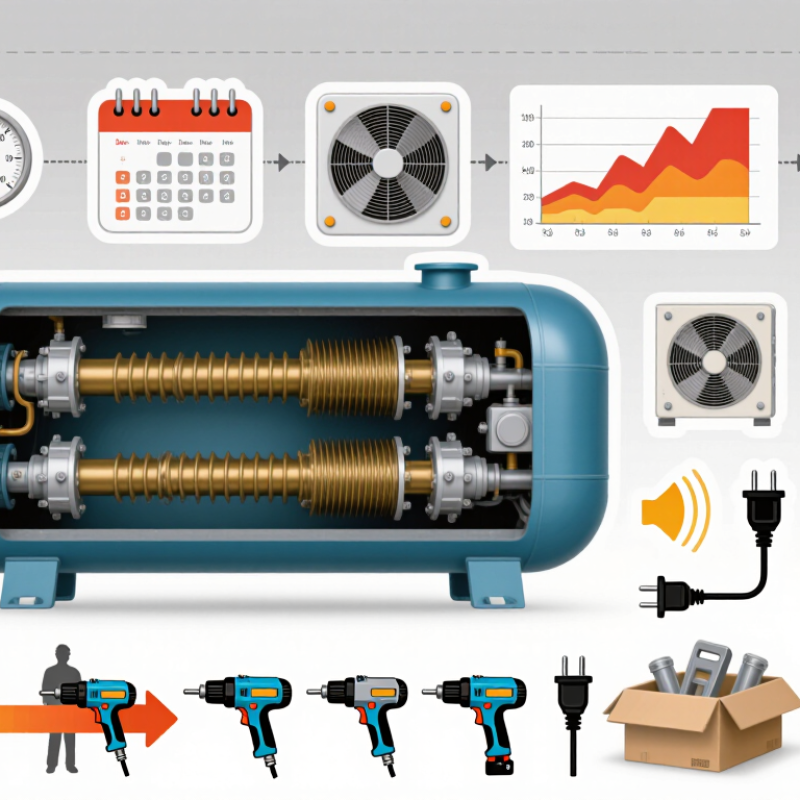
Determine the Required Airflow and Pressure
Before choosing a twin screw air compressor, list every tool and process that may run at the same time. Use each device’s air-consumption data, then estimate peak demand rather than adding only average usage. Keep units consistent, such as cubic feet per minute or cubic metres per hour. Check actual operating patterns, too; a brief production surge can matter more than a tidy daily average.
Pressure must reach the equipment, not merely appear on the compressor display. Check the minimum pressure required at the point of use, then account for losses through pipes, filters, dryers, and fittings. A pressure gauge near the most distant machine can reveal problems that the main gauge misses. Avoid adding a large safety margin without evidence, since oversizing may increase energy use and cycling. I have seen calculations look convincing on paper, then fail to reflect a shift’s real workload.
Tips: Record flow and pressure during a busy production period. Include simultaneous demand and measured leaks. Recheck the figures after process changes. Small details matter.
If readings are unavailable, temporarily measure demand with suitable flow and pressure instruments, or ask a qualified compressed-air specialist to assess the system. Be cautious with estimates based on equipment labels alone; actual consumption can vary with settings and use.
| Selection factor | Typical requirement or method | How to use it when sizing |
|---|---|---|
| Indicative airflow and pressure ranges | ||
| Small workshop with intermittent pneumatic tools | About 0.5–2.0 m³/min (18–71 cfm); commonly 6–8 bar(g) (87–116 psig) at the point of use. | Base the estimate on the tools likely to operate at the same time, rather than adding every tool’s maximum demand. |
| Assembly or general manufacturing area | About 2–10 m³/min (71–353 cfm); commonly 6–8 bar(g) (87–116 psig) at the point of use. | Check the demand of production equipment during peak operation and include any continuous air users. |
| Small or medium CNC and metalworking shop | About 1–8 m³/min (35–283 cfm); commonly 6–8 bar(g) (87–116 psig) at the point of use. | Confirm the machine manufacturer’s pressure and airflow requirements; blow-off and auxiliary equipment can affect peak demand. |
| Larger multi-line production facility | About 10–50 m³/min (353–1,766 cfm); many systems operate around 7–10 bar(g) (102–145 psig), depending on equipment. | Use measured plant demand or a detailed equipment schedule. Consider multiple compressors where capacity control, redundancy, or changing loads require it. |
| How to establish the required compressor capacity | ||
| Airflow basis | Use free air delivery (FAD), normally stated in m³/min or cfm at a specified discharge pressure. | Compare compressor FAD with the calculated or measured peak demand at the required operating pressure. Check that competing offers use the same rating conditions and standard. |
| Simultaneous demand | Sum the airflow of equipment expected to run together, accounting for duty cycles where reliable operating data is available. | Do not size from connected load alone or assume every machine runs continuously. A demand profile or flow measurement can help identify actual peaks. |
| Growth and leakage allowance | Estimate planned future demand and address leakage separately where possible. | Add only a justified allowance for documented growth or uncertainty. Repairing leaks is generally preferable to oversizing the compressor to cover them. |
| How to establish the required pressure | ||
| Pressure at the equipment | Use the minimum pressure specified by the equipment manufacturer, measured while the equipment is operating. | Pressure measured with no airflow may not show the pressure available during peak demand. |
| Distribution and treatment losses | Account for the pressure drop through pipework, filters, dryers, separators, and other components at the required airflow. | Set compressor discharge pressure high enough to meet the point-of-use requirement after these losses. Use measured or component-rated pressure drops rather than an arbitrary increase. |
| Pressure example | If equipment requires 6.5 bar(g) and the measured combined system pressure drop is 0.5 bar, the compressor must supply approximately 7.0 bar(g) under that operating condition. | Recheck pressure drop at peak flow; restrictive or undersized components can cause larger losses as airflow increases. |
| Units and conversions | 1 m³/min ≈ 35.3 cfm; 1 bar ≈ 14.5 psi. “bar(g)” means pressure above atmospheric pressure. | Keep units consistent when comparing equipment demand, compressor capacity, and pressure requirements. |
Note: Application ranges are indicative planning examples, not equipment specifications. Actual airflow and pressure vary with the number and type of machines, operating cycles, air quality requirements, and system design. Confirm the final selection using measured demand or verified equipment data.