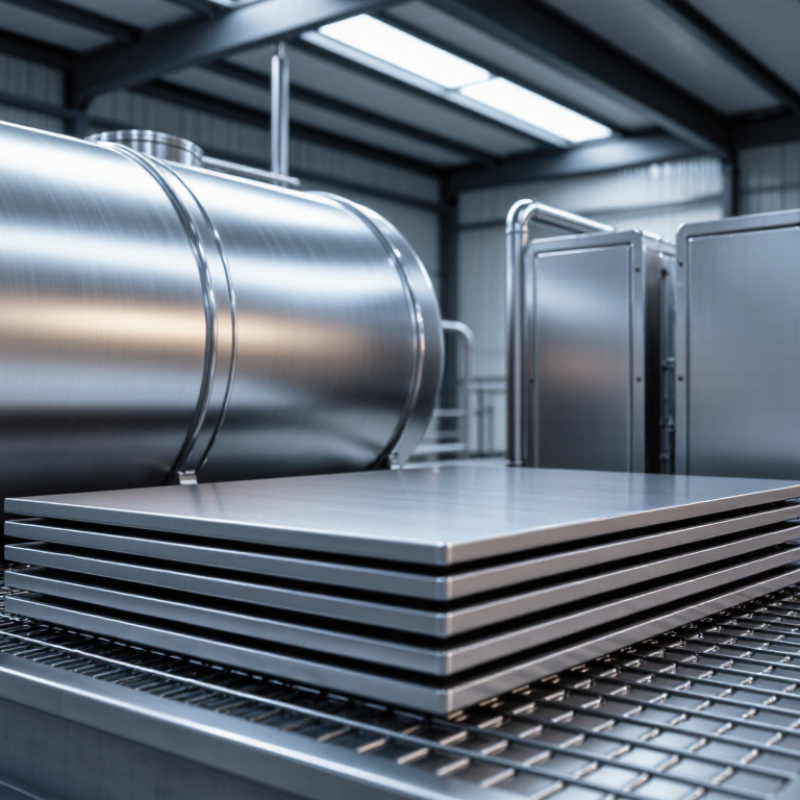
Why Choose 304 Stainless Plate for Global Projects?
Why Choose 304 Stainless Plate for Global Projects? The answer begins with practical performance, not marketing language. In project reviews, engineers often select 304 Stainless Plate for equipment exposed to moisture, food residues, cleaning chemicals, and changing temperatures. Its chromium content supports a protective passive layer, while nickel improves formability and toughness. These properties make it useful for tanks, cladding, platforms, pipe supports, and fabricated enclosures.
It is widely available. That matters.
A coastal processing facility may need replacement plates quickly, while a remote water-treatment project may depend on predictable welding and machining. 304 Stainless Plate usually offers consistent fabrication behavior when suppliers control chemistry, thickness, surface finish, and heat treatment. Buyers should request mill test certificates, dimensional reports, and traceability records. For critical applications, positive material identification and independent inspection can reduce costly mistakes.
Still, 304 is not a universal solution. High chloride exposure, elevated temperatures, or aggressive chemical service may require 316 stainless steel or a specialized alloy. This limitation deserves attention. A polished surface can look impressive, yet poor drainage may still create staining or corrosion. Design details matter as much as the material grade.
Global procurement also involves packaging, documentation, welding procedures, and regional standards. Experienced teams compare ASTM, EN, JIS, or project-specific requirements before ordering. They also verify whether the selected finish suits fabrication and cleaning conditions. With careful specification and realistic service analysis, 304 Stainless Plate can provide a dependable balance of durability, availability, and cost for international projects.
What Is 304 Stainless Plate?
304 stainless plate is a flat, heavy-gauge sheet made from an austenitic stainless steel alloy. Its main ingredients are iron, chromium, and nickel, commonly near an 18% chromium and 8% nickel balance. Chromium forms a thin passive film, which helps protect the surface from rust. Nickel supports toughness, shaping, and stability across changing temperatures.
In practical fabrication, 304 plate is valued for its clean appearance and reliable workability. It can be cut, bent, drilled, and welded with suitable procedures. Food-processing rooms, architectural structures, tanks, and general industrial equipment often use it.
The plate may arrive with a mill finish, brushed finish, or polished surface. Surface condition matters more than many buyers expect. Scratches, embedded steel particles, and poor cleaning can create visible staining.
304 stainless plate is resistant, but it is not invincible. Chloride-rich water, coastal spray, and certain chemicals may cause pitting or crevice corrosion. Project teams should review temperature, exposure, thickness, welding details, and required standards before ordering. Mill certificates and inspection records improve traceability. A small mistake here can become an expensive field repair. In some applications, a low-carbon variant or a more corrosion-resistant grade may perform better. That choice should follow testing and engineering judgment, not appearance alone.
How Is 304 Stainless Plate Made and Classified?
304 stainless plate begins with a carefully controlled melt of iron, chromium, nickel, and minor alloying elements. Chromium supports corrosion resistance, while nickel helps maintain an austenitic structure. The molten steel passes through refining, where chemistry and cleanliness are adjusted. It is then cast into a thick slab.
The slab is reheated and hot rolled through heavy steel rolls. This reduces thickness and improves the plate’s shape. After rolling, annealing relieves internal stress and restores useful mechanical properties. Pickling removes oxide scale from the surface. Some plates receive cold rolling for tighter thickness control and a smoother finish. The process is not always perfectly linear.
Classification depends on more than thickness. Buyers commonly identify 304 plate by grade, dimensions, surface finish, heat treatment, and applicable material standard. The low-carbon 304L variant may be selected when welding conditions require reduced sensitization risk. Plates can also be classified as hot rolled or cold rolled. Surface descriptions may include pickled, bright, or polished conditions, though terminology should be verified with the supplier.
In practical project work, inspectors check thickness, flatness, surface defects, and edge quality. Positive material identification can confirm the alloy family, while mill certificates document chemical and mechanical results. Testing is useful, but it is not flawless. Sampling, storage, and measurement methods can affect conclusions. Clear specifications prevent costly assumptions.
What Properties Make 304 Stainless Plate Suitable for Global Projects?
304 stainless plate is widely chosen for global projects because its properties suit demanding fabrication and transport conditions. Its chromium content creates a passive surface that resists everyday corrosion. Nickel improves toughness, formability, and performance during temperature changes. These characteristics help the plate serve in food equipment, architectural panels, tanks, and industrial structures.
From fabrication experience, 304 plate cuts cleanly and accepts common forming methods. It also welds reliably when procedures are controlled. However, heat tint can remain near welded areas. Cleaning and passivation are still important. Small omissions can reduce long-term surface performance. The material’s smooth finish also makes inspection easier, especially when checking scratches, weld zones, and contamination.
Global projects need more than a familiar grade. They require consistent thickness, traceable test certificates, and clear acceptance criteria. 304 usually performs well in urban, indoor, and mildly industrial environments. It is not a universal answer. Chloride-rich coastal locations may cause pitting, particularly where salt deposits stay wet. That assumption can fail. Engineers should review exposure, temperature, load, and cleaning practices before approval. Regional standards may also differ, so documentation must be checked early. A careful specification often prevents costly replacement, although no material choice removes every project risk.
Which Industries Use 304 Stainless Plate Worldwide?
304 stainless plate serves many global industries because it combines corrosion resistance, fabrication ease, and dependable strength. Its chromium-nickel composition performs well in humid factories, commercial kitchens, and clean processing areas. Fabricators commonly cut, bend, and weld it into tanks, covers, platforms, and machine frames.
Food and beverage plants use 304 plate for hoppers, conveyors, worktables, and storage vessels. Smooth surfaces support practical cleaning routines and reduce places where residue can collect. Pharmaceutical facilities also select it for equipment panels, process vessels, and controlled production rooms. Surface finish still matters. Poor finishing can create cleaning difficulties, even when the material itself is suitable.
Chemical processing, water treatment, construction, and transportation projects use 304 plate for ducts, enclosures, walkways, and structural components. Marine and coastal applications require more careful review because salt exposure can cause pitting, especially around welds and crevices. It is not a universal answer. That assumption can fail. Engineers should assess temperature, chemicals, chloride levels, plate thickness, and joining methods before approval. In field work, protecting the surface during cutting and installation also matters. A small iron particle can later leave a misleading rust mark, making a sound material appear defective.
How Should Buyers Select and Specify 304 Stainless Plate?
Selecting 304 stainless plate starts with the service environment, not the material’s popularity. Buyers should define temperature, moisture, chemicals, loading, and cleaning methods. 304 performs well in many architectural, food-processing, and general industrial applications. However, chloride-rich coastal areas may require a more resistant grade. That decision deserves careful review.
Specify thickness, width, length, surface finish, flatness, and permitted tolerances. State the required material standard, heat treatment condition, and inspection documents. A reliable purchase order should request heat numbers, chemical analysis, mechanical results, and traceable certificates. Do not write only “304 plate.” That description is incomplete. Also confirm whether 304L is more suitable for welded assemblies, especially when post-weld treatment is limited.
Tips: Ask for samples when surface appearance matters. Check the plate against drawings before fabrication. Discuss welding procedures with a qualified engineer. Confirm whether the supplier can maintain tolerances across the full plate size. Small details can prevent costly cutting errors.
In practical project reviews, buyers often focus on price before checking usable yield. A cheaper plate may create more waste after trimming or leveling. I would compare total fabrication cost, not just the quoted kilogram price. Inspect packaging too; exposed edges can suffer handling damage before installation. One overlooked point is documentation language. Ensure certificates are clear to inspectors, fabricators, and site teams in different countries. A specification that seems obvious to one engineer may confuse another. Recheck it.