
×

China Best Compound Steel Grating Supplier?

Choosing a China-based supplier for Compound Steel Grating takes more than comparing prices. The product commonly combines an open steel-grating panel with a solid plate, creating a surface suited to platforms, walkways, and equipment areas. Details matter. A buyer should check load tables, panel dimensions, bearing-bar spacing, weld consistency, and surface treatment against the project drawings. A small mismatch can complicate installation.

The scale of the steel industry offers useful context, but not a quality guarantee. World Steel Association’s World Steel in Figures 2024 reported global crude-steel production of 1,888.2 million tonnes in 2023. That figure describes industry output, not the performance of any individual supplier. Ask for material certificates, inspection records, coating details, and clear answers about tolerances. Requesting a sample or reviewing production photos can also reveal practical workmanship, such as uneven welds or rough plate edges. Look closely.

The best supplier is not necessarily the largest or cheapest. It is the one that can explain how its product matches your load requirements, environment, and installation plan. Verify claims with documents, not polished catalogue images alone. Some information may still be incomplete; acknowledge that and request clarification before ordering. A careful comparison makes the search for China’s best Compound Steel Grating supplier more credible—and more useful for the project.
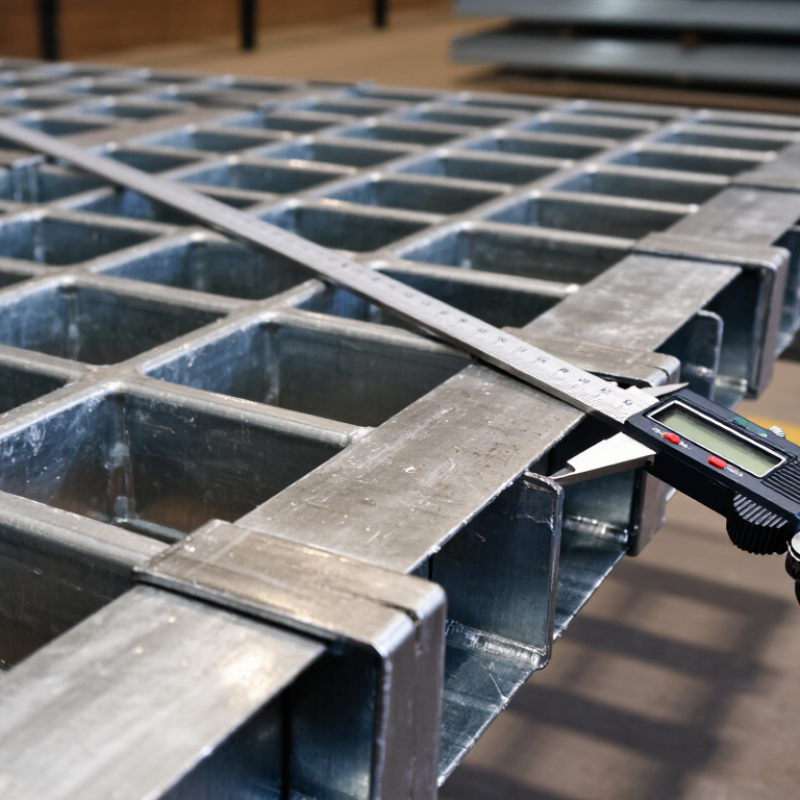
China Best Compound Steel Grating Supplier?

What Compound Steel Grating Is and How It Is Constructed

China Best Compound Steel Grating Supplier?

What Compound Steel Grating Is and How It Is Constructed

Compound steel grating combines a load-bearing steel bar grid with a solid plate fixed to its upper surface. The grid usually consists of parallel bearing bars joined by perpendicular crossbars through welding or mechanical locking. A plain or patterned plate is then attached by welding or fasteners. The result is a panel with a firm walking surface and an open support structure beneath it. Not just a flat plate.

The grid carries loads across the supporting span, while the plate helps cover the openings and can reduce dropped objects. Engineers select bearing-bar depth, spacing, plate thickness, and connection details to suit the load and support layout. NAAMM’s Metal Bar Grating Manual, MBG 531, provides industry guidance for grating selection and design. ISO 14122-2 also addresses permanent walkways and platforms used to access machinery. Actual project requirements still matter.

Material context matters, too. The World Steel Association’s World Steel in Figures 2025 reports global crude-steel production of 1,882.6 million tonnes in 2024; this indicates the scale of steel supply, not compound-grating quality. In practice, inspect weld continuity, panel dimensions, edge finishing, and coating coverage. A patterned plate may improve traction, but it does not guarantee a slip-resistant surface in every condition. That detail is easy to overlook.

How Compound Steel Grating Is Manufactured in China

China Best Compound Steel Grating Supplier?
How Compound Steel Grating Is Manufactured in China

Compound steel grating combines a load-bearing steel grid with a solid or patterned plate. Manufacturing starts with approved drawings, steel grades, bar spacing, and load requirements. Workers cut bearing bars to length, then weld crossbars at controlled intervals. The grid is checked for spacing and squareness. Small deviations matter.

The surface plate is cut to size and attached by welding or specified fasteners. Depending on the project, it may be plain, chequered, or perforated. Fabricators then remove sharp burrs and inspect welds, dimensions, and flatness. Hot-dip galvanizing may follow fabrication; coating requirements should be stated clearly, with ASTM A123/A123M often referenced for zinc coatings on iron and steel products. The sequence can vary, so buyers should confirm it against the drawings.

China’s scale offers useful manufacturing context, not a quality guarantee. World Steel Association’s World Steel in Figures 2024 reports China produced 1,019.1 million tonnes of crude steel in 2023. That figure describes national output, not grating quality. Ask suppliers for material certificates, dimensional inspection records, and coating-thickness results tied to the actual order. Check sample edges and welds, too. A neat surface can still hide uneven spacing, and I would not judge a load-bearing panel by appearance alone.

How Compound Steel Grating Is Manufactured in China

This chart shows a typical production sequence: the steel grating and checkered plate are prepared, joined, finished, surface-treated, and inspected. Exact methods and specifications vary by product and project. The numbered values indicate process order, not production time or output.

Key Standards and Quality Factors for Supplier Evaluation

When evaluating a compound steel grating supplier, confirm exactly what “compound” means in the drawings and quotation. The term can describe different product structures, so align on materials, layer arrangement, and installation scope before comparing prices. Ask for load tables, material certificates, and dimensioned drawings. Check bar spacing, panel thickness, bearing direction, and edge details against the project specification. Small mismatches can complicate installation.

Tips: Request a sample panel or clear production photos. Check weld consistency and cut edges. For galvanized products, specify the applicable coating standard and ask for inspection records; requirements vary by project. Ask how the supplier tracks batches and handles nonconforming panels. Details matter.

A reliable supplier should explain its inspection process and provide traceable documentation, not just verbal assurances. Review tolerances, surface finish, packaging, and delivery plans. If the grating will face moisture, chemicals, or heavy traffic, describe those conditions when requesting a recommendation. Confirm that the proposed design meets the engineer’s approved requirements. A low quote may still be suitable, but only when the scope and evidence match. I would not rely on a polished brochure alone; actual records and consistent answers are more useful.

China Best Compound Steel Grating Supplier? - Key Standards and Quality Factors for Supplier Evaluation

Evaluation Dimension What to Specify or Verify Relevant Standard or Reference Useful Evidence Evaluation Check
Product definition Confirm what “compound” means for the project, such as a steel grating panel combined with a plate, nosing, frame, or other component. Record materials, dimensions, connections, and intended use. Project drawings and technical specification; applicable local building and safety requirements. Approved drawings, bill of materials, panel layout, and written scope of supply. Check that quotations describe the same configuration and include all required accessories and fabrication.
Steel grade and traceability Specify the required steel grade, product form, and mechanical-property requirements. Ensure material can be traced from the certificate to the production batch. ASTM A36/A36M may apply to carbon structural steel; ASTM A1011/A1011M covers hot-rolled steel sheet and strip. Confirm suitability for the actual component and contract. Material test certificates showing grade, heat or batch number, and reported properties. Check that certificates match the specified grade and that identification remains traceable during fabrication.
Load capacity and deflection Define span, support conditions, load type and magnitude, load position, and acceptable deflection. Point loads and uniformly distributed loads can produce different results. Project design criteria and applicable building code. ISO 14122-2 addresses safety requirements for permanent means of access, including working platforms and walkways, where applicable. Calculations or certified load tables that state assumptions, panel orientation, span, loading, and deflection. Reject load claims that omit test or calculation conditions; verify that support and installation details match the design.
Dimensions and fabrication Set panel length and width, bearing-bar depth and spacing, cross-bar spacing, cut-outs, edge treatment, and dimensional tolerances in the purchase specification. Approved drawings and the contract’s stated tolerances; use any referenced grating standard only when its scope matches the product. Inspection records, calibrated measurement tools, and sample-panel dimensional reports. Compare measured panels with approved drawings, including cut-outs, squareness, edge details, and fit-up.
Welding and assembly Define the joining method, weld locations, workmanship requirements, and inspection scope. Requirements depend on the design and service conditions. Contract-specified welding procedures and acceptance criteria; ISO 5817 may be referenced for quality levels of imperfections in fusion-welded joints when appropriate. Welding procedure documentation, welder qualification records where required, and visual or other inspection reports. Look for consistent joints and documented inspection; agree in advance on any non-destructive testing requirements.
Hot-dip galvanizing State the required coating process, appearance criteria, inspection method, and any project-specific coating requirements. Coating thickness requirements depend on the applicable standard and material details. ISO 1461 covers hot-dip galvanized coatings on fabricated iron and steel articles; ASTM A123/A123M covers zinc coatings on iron and steel products. Specify which applies. Coating inspection report with the standard used, measurement results, and batch identification. Check coverage and finish against the agreed acceptance criteria; clarify repair procedures for damaged areas.
Surface and safety details Specify whether a plain or slip-resistant surface is needed, along with edge protection, kick plates, nosings, and any applicable opening or fall-protection requirements. Project risk assessment and local regulations; ISO 14122-2 may be relevant to permanent platforms and walkways. Drawings, product samples, and documented surface or safety-feature specifications. Confirm surface features suit the environment and that safety requirements are addressed in the complete installation.
Quality management and inspection Review documented controls for incoming materials, fabrication, inspection, nonconforming products, and final release. Certification alone does not establish product compliance. Use the quality-system requirements stated in the contract and verify their scope and validity directly with the issuing body where needed. Quality plan, inspection and test plan, calibration records, and sample production inspection reports. Confirm inspection stages, acceptance criteria, record retention, and the process for corrective action.
Packing, delivery, and documentation Agree on panel identification, packing method, corrosion protection during transport, delivery terms, and required document package. Purchase contract, shipping requirements, and destination-country import rules. Packing list, inspection release, material certificates, coating records, and installation or handling guidance as agreed. Check that delivered quantities and identifiers match the order and that documents are complete before shipment.

Note: Standards and acceptance criteria should be selected according to the product configuration, project specification, intended use, and destination-market requirements. No single standard covers every compound steel grating design.

Common Applications of Compound Steel Grating

China Best Compound Steel Grating Supplier?

Common Applications of Compound Steel Grating

Compound steel grating combines load-bearing bars with a solid or patterned plate. It creates a firm surface with fewer open gaps. This makes it useful on factory floors, equipment platforms, and maintenance walkways where tools or small parts might otherwise fall through. A steady, practical choice.

At stair landings and access ramps, the plate can provide a more continuous walking surface than open grating alone. On loading docks, it helps support carts and foot traffic while the grating structure carries the load. Compound panels also appear around pumps and treatment equipment, where workers need stable access for inspection.

The exact design matters. A plate layer can limit drainage, so it may not suit areas where water must pass through quickly.

For each installation, check the panel span, support spacing, expected loads, and surface finish against site conditions. In wet or exposed locations, consider corrosion protection and how the surface will be cleaned. These details are easy to overlook. Not every compound panel is ideal for every platform, and a real site assessment may change the specification.

How to Compare Chinese Compound Steel Grating Suppliers

When comparing Chinese compound steel grating suppliers, start with the same technical brief for every quotation. Include panel dimensions, bearing-bar spacing, surface-plate thickness, steel grade, finish, and expected load. A supplier should explain how the grating and plate are joined, not just send a price. Ask for a clear drawing. Small details matter.

Check whether load information matches your actual use, such as a wet service platform or a walkway carrying carts. Request test records or calculation details that identify the panel span and support conditions. Compare coating specifications too: a stated galvanized finish is less useful without a measurable coating requirement. Inspect sample welds and edges for uneven seams, sharp burrs, or plate distortion. Photos help, but they cannot confirm everything.

Then compare production control and communication. Can the supplier confirm tolerances, inspection steps, packing method, and delivery schedule in writing? Ask how damaged panels are handled and whether replacement pieces can match the original dimensions. A very low quotation may omit important items, while a polished brochure proves little. I would leave some uncertainty until documents and samples agree; even a careful review can miss a detail in a drawing.