China Best Aluminum Composite Panel Exporter for Global Buyers?
Choosing the right Aluminum Composite Panel Exporter can shape an entire building project. It affects safety, appearance, delivery, and long-term maintenance. Global buyers need more than attractive catalog images. They need evidence.
An experienced exporter should explain panel structure clearly. That includes aluminum skin thickness, core type, coating system, fire-performance data, and production tolerances. Reliable suppliers usually provide technical datasheets, test reports, sample panels, and traceable batch information. A small sample can reveal surface waviness, uneven color, or weak protective film. These details matter on a high-rise façade.
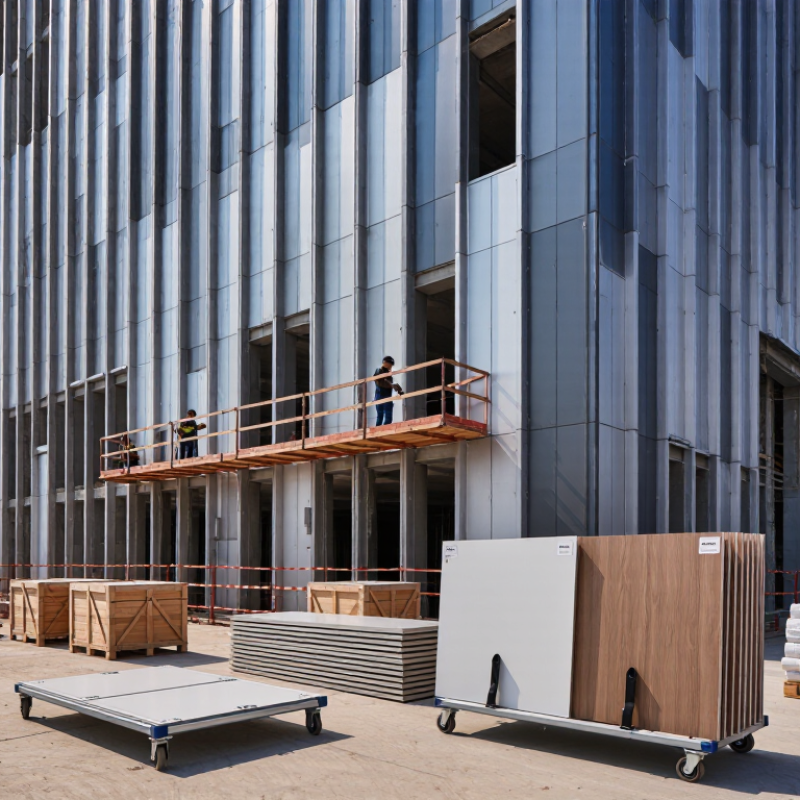
Dr. Stephen Emmitt, a respected construction and façade researcher, has said, “Design quality depends on information quality.” This principle fits the export market closely. A dependable Aluminum Composite Panel Exporter should communicate specifications before discussing price. The buyer should also confirm factory capacity, inspection procedures, packaging methods, and realistic lead times. Wooden crates, corner protection, moisture control, and clear labeling can prevent expensive damage during transport.
Price still matters. It should not be the only measure. A cheaper panel may create higher costs through rework, color mismatch, or delayed installation. Some exporters present impressive certificates but explain little about their scope or validity. That deserves careful questioning.
The market is not flawless. Even experienced buyers can overlook coating compatibility or local installation conditions. Therefore, this guide examines how global purchasers can compare exporters with practical judgment, verified documentation, and direct factory communication. A strong partnership begins with honest details, not polished promises.
What Is an Aluminum Composite Panel and Why Does Exporter Choice Matter?
An aluminum composite panel combines two thin aluminum sheets with a lightweight mineral or polymer core. This layered structure creates a flat, rigid, and relatively light building material. It is used for exterior façades, signs, interior walls, and commercial renovations. The surface may carry paint, texture, or a protective coating.
Exporter choice matters because panel quality depends on more than appearance. A reliable exporter should explain core composition, aluminum thickness, coating type, and production tolerances clearly. Buyers should request technical data, sample panels, and recent test reports. Check coating adhesion, color consistency, fire performance, and weather resistance. Small details matter. A panel can look excellent in a showroom but behave differently after months of sunlight and rain.
Experienced exporters also understand packing, container loading, and destination requirements. Protective film, corner guards, and dry storage instructions can prevent costly damage. Ask how batches are identified and how complaints are handled. Good communication is practical evidence of reliability. Price still matters, but unusually low prices may hide thinner aluminum or weaker inspection procedures. That possibility deserves careful review. No exporter is perfect, and buyers should question unclear claims instead of trusting polished brochures. A transparent supplier will accept reasonable inspections and provide documents that match the actual shipment.
| Data Dimension | Verified Industry Information | Typical Buyer Requirement or Range | Why It Matters When Selecting an Exporter |
|---|---|---|---|
| Product Definition | An aluminum composite panel is a flat sandwich panel made from two aluminum sheets bonded to a central core. | Commonly used for building façades, canopies, signage, partitions, column covers, and interior decoration. | The exporter should clearly state the panel structure, core material, aluminum thickness, coating system, and intended application. |
| Panel Construction | The panel normally consists of an aluminum top sheet, a polymeric or mineral-filled core, and an aluminum back sheet. | Typical overall thicknesses include 3 mm, 4 mm, and 6 mm, depending on the application and local regulations. | Accurate construction data helps buyers compare products on a like-for-like basis rather than comparing price alone. |
| Aluminum Skin Thickness | Aluminum face sheets are commonly specified by thickness, with approximately 0.20 mm to 0.50 mm frequently used in architectural panels. | Thicker skins are generally preferred for demanding façade work, deeper routing, larger panels, and improved dent resistance. | The exporter should provide measured thickness tolerances and distinguish aluminum skin thickness from total panel thickness. |
| Core Types |
| Core selection should be based on the building code, project height, occupancy type, façade design, and required fire classification. | A reliable exporter should not recommend one core for every project and should provide product-specific fire-test evidence. |
| Surface Coating | Common surface finishes include fluoropolymer-based coatings, polyester coatings, anodized finishes, brushed effects, solid colors, and wood or stone patterns. | Coating choice depends on ultraviolet exposure, coastal conditions, cleaning requirements, color stability, and design intent. | The exporter should disclose the coating type, nominal coating thickness, color reference, gloss level, and warranty conditions where applicable. |
| Standard Panel Sizes | Manufacturers commonly offer panel widths around 1,220 mm, with lengths such as 2,440 mm or longer custom lengths available in many markets. | Final dimensions should be confirmed against the cutting plan, container loading method, installation system, and local handling limitations. | Accurate dimensional planning can reduce offcuts, shipping volume, installation time, and total project cost. |
| Dimensional Tolerances | Panel length, width, thickness, squareness, flatness, and surface quality should be controlled according to the applicable product specification or standard. | Buyers should request a tolerance sheet rather than relying only on nominal dimensions. | Consistent tolerances are important for CNC routing, folding, cassette systems, joint alignment, and façade appearance. |
| Fire-Performance Evidence | Fire performance is evaluated through recognized national or international test systems. EN 13501-1 and ASTM E84 are examples of commonly referenced systems, but their classifications are not interchangeable. | The required classification must match the destination country's building regulations and the specific end use. | An exporter should provide current reports identifying the tested product construction, thickness, core, test method, and issuing laboratory. |
| Mechanical and Bond Performance | Relevant evaluations may include peel strength, bending behavior, impact resistance, coating adhesion, and resistance to environmental exposure. | ASTM D1781 is one example of a peel-resistance test method used for certain bonded sandwich constructions; the applicable method depends on the project specification. | Test results help buyers assess delamination risk, fabrication performance, and long-term service suitability. |
| Weather Resistance | Outdoor durability is influenced by coating chemistry, aluminum alloy and temper, pretreatment, ultraviolet exposure, humidity, salt, temperature changes, and installation details. | Coastal, tropical, desert, and high-altitude projects may require different coating and quality-control considerations. | The exporter should provide relevant weathering or corrosion-test information and avoid unsupported claims about service life. |
| Quality-Control Documents | Useful documents may include a technical data sheet, certificate of analysis, inspection report, coating information, packing list, and product-specific test reports. | Documents should identify the product configuration, batch or production reference, quantity, dimensions, and inspection criteria. | Complete documentation supports customs clearance, project approval, incoming inspection, and claims management. |
| Exporter Manufacturing Capability | A capable exporter should be able to explain core preparation, lamination, coating or finishing, trimming, inspection, packing, and traceability procedures. | Buyers may request production photos, sample panels, factory audit information, and a defined inspection plan. | Transparent manufacturing information reduces the risk of receiving panels that differ from the approved sample. |
| Sample Approval | Color, gloss, texture, flatness, edge quality, protective film, and core appearance should be checked before mass production. | For large projects, the approved reference sample should include the exact panel thickness, aluminum skin thickness, finish, and core type. | Written sample approval creates a clear quality benchmark for production and shipment inspection. |
| Packaging for Export | Panels are commonly protected with surface film and packed in reinforced wooden cases, pallets, or other export-suitable packaging. | Packaging should protect against abrasion, moisture, edge damage, shifting, and excessive stacking pressure during multimodal transport. | Packaging quality directly affects the percentage of usable panels received at the destination. |
| Shipping and Trade Terms | International quotations may use Incoterms such as EXW, FOB, CIF, or DAP. Each term allocates different costs, risks, and responsibilities. | The quotation should state the named place or port, currency, validity period, lead time, packing basis, and whether freight is included. | Clear trade terms prevent unexpected logistics charges and misunderstandings about responsibility for damage or insurance. |
| Container-Loading Planning | Loading capacity depends on panel dimensions, thickness, packing method, allowable stacking, gross weight, and the shipping route. | Buyers should request a packing list with package dimensions, net weight, gross weight, and total volume before shipment. | Accurate loading data supports freight comparison and helps prevent overloading or inefficient use of container space. |
| Compliance with Destination Market | Building materials may be subject to local fire, structural, environmental, labeling, chemical, and documentation requirements. | Compliance must be checked against the destination country and the actual application, especially for external façades and high-rise buildings. | The lowest-price product may not be usable if it lacks the approvals or test evidence required by the importing market. |
| Warranty and Claims Process | A professional supply agreement should define warranty scope, exclusions, inspection timing, evidence requirements, and remedies for nonconforming goods. | Claims should be supported by photographs, package references, quantities affected, delivery records, and inspection results. | A clear after-sales process is an important indicator of exporter reliability, particularly for large or repeat orders. |
| Total Cost of Ownership | Total project cost includes panel price, freight, duties, fabrication, installation, maintenance, waste, replacement risk, and compliance testing. | Buyers should compare equivalent specifications, including core, aluminum thickness, coating, dimensions, packaging, and delivery terms. | A technically suitable panel with dependable documentation may provide better value than a cheaper panel with higher project risk. |