China Best Gas Brick Oven Manufacturer and Supplier
A Gas Brick Oven is more than a cooking appliance: it shapes crust texture, service speed, and daily operating routines. For pizzerias and bakeries, steady heat and dependable recovery matter when orders arrive in a rush. A well-built oven should deliver even temperatures across the baking surface, while allowing practical access for cleaning and maintenance.
Industry data offers useful context, though it cannot predict demand for any single oven type. The USDA Economic Research Service’s Food Expenditure Series reports that food away from home accounted for 58.5% of U.S. food spending in 2023. The National Restaurant Association’s 2024 State of the Restaurant Industry projected U.S. restaurant sales of $1.1 trillion that year. These figures describe a large food-service sector, not gas-brick-oven sales. That distinction matters.
For buyers comparing China-based manufacturers and suppliers, look beyond price and polished product images. Ask for burner specifications, refractory-material details, insulation information, temperature testing, and clear installation guidance. Check whether the supplier can explain how the oven performs under the operating conditions you expect. Details matter. A specification sheet may look complete, yet installation, ventilation, and local service support can still be weak points. Those issues deserve honest questions, not assumptions. This guide examines the features, supplier checks, and practical trade-offs that help buyers assess a Gas Brick Oven with care.
What Is a Gas Brick Oven?
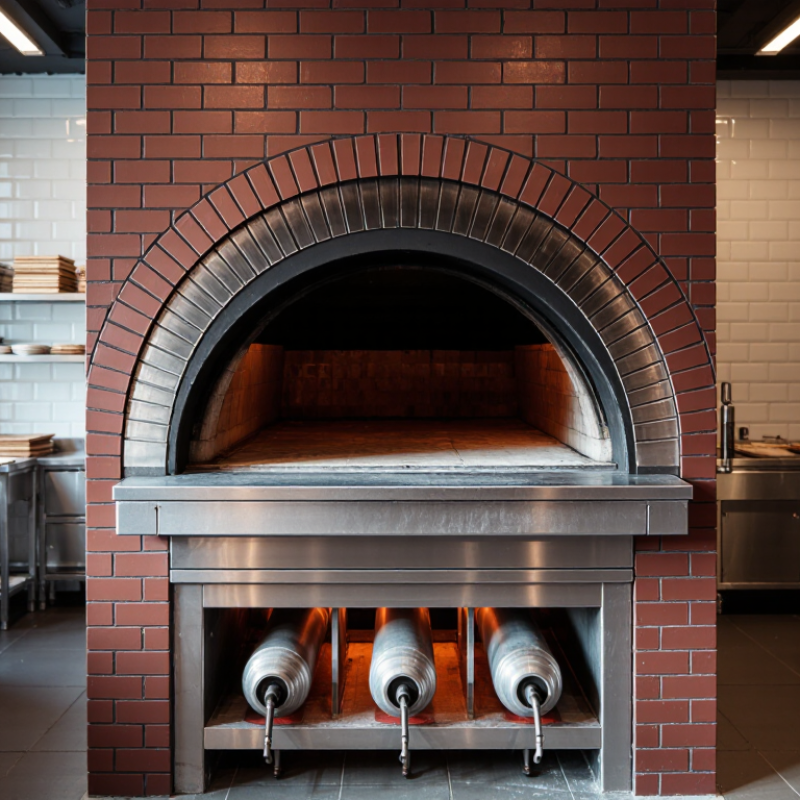
A gas brick oven combines a gas burner with a cooking chamber lined or built with heat-retaining masonry. The burner heats the chamber, while the brick or refractory floor absorbs and stores energy. That stored heat cooks food from below; hot air and radiant heat from the dome cook it from above. That mass matters.
Unlike a wood-fired oven, a gas model does not rely on burning logs for heat. Its flame is usually easier to adjust, which helps cooks manage temperature during a busy service or at home. Still, a control knob cannot make every part of the oven equally hot. The floor may run hotter near the burner, and the dome may need time to warm fully. A simple thermometer can reveal these differences.
A typical oven suits pizza, flatbread, roasted vegetables, and some breads. For example, a well-heated brick floor can crisp a pizza base while the upper chamber browns its cheese. The exact results depend on the oven’s design, fuel supply, and preheating time. Gas does not remove the need for practice. Ventilation and installation also matter, so follow the manufacturer’s instructions and use a qualified installer where needed. A small uneven patch can still surprise you.
What Is a Gas Brick Oven?
A gas brick oven uses a gas burner to heat a masonry cooking chamber. The chart shows typical oven-temperature ranges for several cooking applications; actual temperatures vary by recipe, oven design, and measurement method.
Temperatures are indicative cooking ranges in degrees Celsius, not guaranteed operating specifications.
How a Gas-Fired Brick Oven Works
A gas-fired brick oven turns fuel into stored and circulating heat. A burner heats the cooking floor and the curved brick dome. The flame also warms the air, which moves toward the oven’s vent. Brick absorbs heat gradually, then radiates it back toward the food. That stored warmth helps keep the oven hot between batches.
Preheating takes time. A cook may watch the flame and check the floor with an infrared thermometer; a single reading does not tell the whole story. The center can be hotter than the edges, and the dome may heat at a different rate. The process is less uniform than a diagram suggests. After the oven reaches working temperature, the burner can often be turned down to maintain heat, though the right setting depends on the oven’s design and fuel system. A pizza’s base may brown quickly while its toppings still need time, so placement and turning matter. Small adjustments make a difference. Operators should follow the manufacturer’s operating instructions and keep vents clear.
Key Features of Gas Brick Ovens Made in China
Gas brick ovens made in China are judged by more than peak temperature. The cooking floor should heat evenly, while the refractory dome stores heat for steady baking. Look for a thick, replaceable floor, sealed insulation, and a burner that spreads flame without scorching one side.
Small details matter. A clear temperature gauge and accessible service panels help operators spot faults before a busy shift. Ask suppliers for test records covering heat-up time, temperature variation, gas consumption, and recovery after loading. A polished brochure is not a performance test.
ENERGY STAR’s commercial-oven materials report that certified gas convection ovens can use about 20% less energy than standard models. That figure is a useful efficiency benchmark, not a verified saving for brick ovens; oven types and test conditions differ. Request comparable test results for the specific model.
Also check whether the oven maintains floor temperature after several pizzas, not just when empty. That difference can affect crust texture and service speed.
One caveat: insulation and controls cannot compensate for poor burner placement. Ask how the oven performs under repeated loading, and review the data before choosing a supplier.
How to Evaluate Chinese Manufacturers and Suppliers
When evaluating a Chinese gas brick oven manufacturer, look beyond catalogue photos. Ask for a live production-line video and a test run using your preferred dough, temperature, and baking time. Check that the oven heats evenly: place thermometers at several points, then compare readings after preheating. Request written details for burner type, gas consumption, refractory thickness, insulation, and temperature controls. A sample test is more revealing than a polished brochure.
Use independent benchmarks carefully. The International Energy Agency’s Energy Efficiency 2023 report says global energy-intensity improvement was 1.3% in 2022, below the 2% annual average for 2010–2019. That figure is not oven-specific, but it supports asking suppliers for measured fuel-use data under stated conditions. The World Bank’s 2023 Logistics Performance Index ranked China 19th among 139 economies; still, national rankings cannot guarantee one factory’s delivery performance. Ask for recent export references, packaging photos, lead-time records, and a clear process for handling spare parts. Small details matter.
Review drawings, test records, and warranty terms before paying a deposit. Confirm who answers technical questions after installation, and how quickly common parts can be shipped. If possible, have an independent inspector witness a production test. No checklist catches everything. I would also ask the supplier to explain one past defect and how it was corrected; a vague answer deserves another question.
Applications, Customization, and After-Sales Support
China Best Gas Brick Oven Manufacturer and Supplier
A gas-fired brick oven can serve pizzerias, bakeries, hotel kitchens, and outdoor dining spaces. Its brick chamber stores heat, helping cooks bake pizzas with crisp bases and evenly browned edges. It can also handle flatbreads and roasted vegetables. Results still depend on dough, loading, and temperature control. The oven is only part of the process.
Customization should begin with the menu and available space. Buyers can discuss chamber dimensions, burner configuration, insulation, exterior finishes, and access for cleaning. A supplier should provide clear specifications and explain installation needs, including ventilation and gas connections. Ask about testing procedures, operating instructions, replacement parts, and response times for service. Custom features may extend production time; that trade-off is worth discussing early. No oven suits every kitchen.
Tips: Measure doorways and the installation area before ordering. Keep a record of burner settings and cleaning routines. Ask for support contacts in writing. Small details matter. Also, confirm that the proposed setup fits your site and local requirements before installation.