Best CNC And Laser Cutter Options for Precision Fabrication?
In the realm of precision fabrication, choosing the right tools is crucial. The CNC And Laser Cutter market has grown significantly. With so many options available, it can be overwhelming. Precision, speed, and versatility are key factors to consider.
CNC and laser cutters each have unique advantages. CNC machines excel in intricate designs, while laser cutters offer clean and sharp edges. However, these tools require a level of expertise. Novices may find it challenging to optimize their capabilities.
Beyond the features, the specific needs of your projects dictate the best choice. Some may prioritize budget, while others focus on performance. Evaluating your requirements thoroughly can help. A thoughtful decision will lead to improved outcomes in fabrication tasks. Knowing your options well can mean the difference between success and frustration.
Overview of CNC and Laser Cutting Technologies
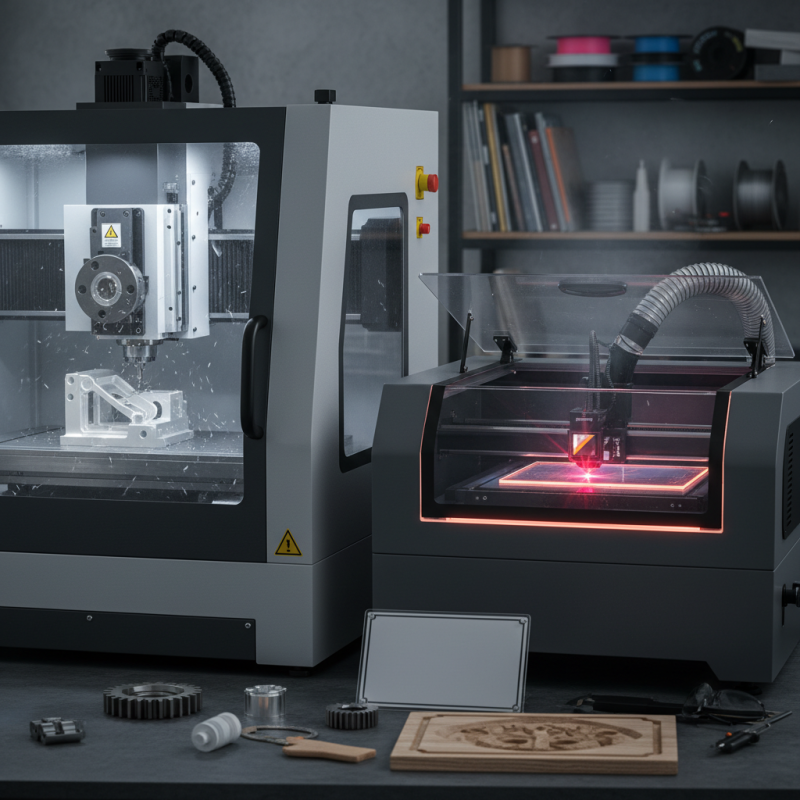
CNC and laser cutting technologies are at the forefront of precision fabrication. CNC, or Computer Numerical Control, uses programmed commands to manipulate tools. This creates intricate designs in various materials. Laser cutting employs a focused beam of light to slice through materials with high accuracy. Both technologies provide distinct benefits and applications.
The choice between CNC and laser cutting may depend on the project specifics. CNC machines excel in carving and machining, making them ideal for complex shapes. On the other hand, laser cutters are perfect for cutting thin materials with clean edges. Each method has its limitations; CNC can be slower for certain tasks, while laser cutting might struggle with thick materials.
Advancements in technology are continuously evolving both processes. However, not every project requires the latest equipment. Understanding the right tool for the job can prevent costly mistakes. Practitioners must weigh the trade-offs between speed, precision, and material compatibility. This knowledge ensures optimal results in fabrication projects.
Key Features to Consider When Choosing CNC and Laser Cutters
When choosing CNC and laser cutters, key features are vital for precision fabrication. Precision is often defined by the machine's tolerances. According to a recent report by the International Journal of Advanced Manufacturing Technology, CNC machines can achieve tolerances as low as ±0.001 inches. This precision is critical for industries like aerospace and medical devices, where even slight deviations can cause failure.
Speed and versatility are also crucial. A survey from the Fabricators & Manufacturers Association indicates that 70% of manufacturers prioritize speed to meet market demand. Laser cutters, known for their rapid cutting speeds, can process materials like wood, metal, and acrylic. However, high speeds may sometimes compromise precision. This trade-off requires careful consideration based on project requirements.
User experience and software compatibility cannot be overlooked. Many manufacturers report challenges with software integration, complicating workflow optimization. A study by the National Institute of Standards and Technology highlighted that improper software choices could lead to a 30% decrease in production efficiency. Evaluating the learning curve for operators is also important, as complex systems may hinder productivity.
Top CNC and Laser Cutter Brands for Precision Fabrication
When considering the top CNC and laser cutter brands for precision fabrication, it's crucial to analyze industry data. According to a market research report, the global CNC machining market is projected to reach $100 billion by 2025, reflecting a 7% CAGR. This growth highlights the increasing demand for precise fabrication techniques across various industries.
Leading brands in CNC and laser cutting showcase advanced technologies and innovative designs. Many focus on user-friendly interfaces that enhance operational efficiency. A survey revealed that over 65% of fabricators prioritize precision over price when choosing equipment. However, the challenge lies in balancing investment cost with functionality. Some brands may excel in precision but fall short in after-sales support or machine durability.
In laser cutting, the choice of materials also influences cut quality. A well-timed analysis can reveal that a significant percentage of fabricators experience issues with inconsistent cuts. This inconsistency often stems from inadequate machine maintenance or improper settings. Manufacturers are continuously addressing these pitfalls, striving for improved reliability. Nonetheless, even top-tier brands must adapt to rapid technological advancements to maintain their competitive edge.
Best CNC And Laser Cutter Options for Precision Fabrication
| Type | Max Cutting Thickness | Work Area (mm) | Speed (mm/min) | Precision (mm) |
| CNC Router | 50 mm | 1200 x 2400 | 6000 | 0.1 |
| Laser Cutter | 20 mm | 1000 x 600 | 3000 | 0.05 |
| Plasma Cutter | 40 mm | 1500 x 1500 | 5000 | 0.5 |
| Water Jet Cutter | 100 mm | 2000 x 3000 | 2500 | 0.1 |
Comparative Analysis of CNC vs. Laser Cutting Applications
In the realm of precision fabrication, choosing between CNC and laser cutting is critical. Both technologies have unique strengths. CNC machining is ideal for creating intricate parts from various metals and plastics. According to a recent industry report, CNC machines achieve tolerances as tight as ±0.01 mm, making them suitable for aerospace and medical applications. They excel in scenarios requiring multiple operations, such as milling, drilling, and grinding.
On the other hand, laser cutting is superior for materials like wood, acrylic, and thin metals. A market study indicates laser cutters can operate at speeds up to 1000 inches per minute. This speed significantly enhances production efficiency. However, laser cutting has limitations with thicker materials. In some cases, edge quality may suffer, especially when cutting reflective metals. Users often encounter issues with warping or heat-affected zones, necessitating further refinements in their designs.
Ultimately, both CNC and laser cutting have their places in fabrication. Decisions hinge on material type, project complexity, and desired precision. Industries are increasingly combining strengths from both technologies to optimize production capabilities. Thus, understanding the nuances between these methods is essential for effective fabrication.
Cost-Effectiveness and Maintenance of CNC and Laser Cutters
The cost-effectiveness of CNC and laser cutters is crucial for businesses focusing on precision fabrication. According to a recent report by Market Research Future, the global CNC machine market is projected to reach $100 billion by 2025. This indicates a growing reliance on CNC technology across various industries, highlighting the importance of maintenance to ensure long-lasting performance.
Maintenance is often overlooked but critical. Regular checks can prolong machine lifespan and reduce costs. A report from Machine Tool Technologies states that a properly maintained machine can increase efficiency by 30%. Operators should clean components regularly and inspect for wear. Neglect can lead to expensive breakdowns. Tips: Schedule maintenance during downtime to mitigate disruption.
Cost considerations also include energy consumption. Laser cutters can be more energy-efficient, reducing utility expenses in the long run. While initial investment may be high, operational savings may offer rebates over time. Awareness of these factors helps in making informed decisions. Tips: Document energy consumption to identify savings opportunities.
Best CNC and Laser Cutter Options for Precision Fabrication
This chart compares the cost-effectiveness and maintenance requirements of various CNC and laser cutters. The data is presented in terms of initial investment, operating costs over five years, and maintenance frequency.