
Why Choose LED Ceiling Panel Lights?
LED ceiling panels can make a room feel brighter without adding visual clutter. Their broad, even light suits offices, kitchens, classrooms, and hallways where a single bulb may leave dark corners. A slim Ceiling Panel Light also sits neatly against the ceiling, which helps in rooms with limited headroom. Clean lines. Softer shadows. A calmer workspace.
The benefits depend on choosing and installing the right panel. Check its dimensions, light output, color temperature, and compatibility with existing controls. A cool white panel can help a task area feel crisp, while a warmer tone may feel more comfortable in a lounge. Still, brightness is not the whole story. Glare can bother people working beneath a poorly positioned panel, and a low-quality driver may flicker or fail early. Small details matter.
Lighting specialist Jordan Ellis offers this illustrative line: “Good panel lighting should make a room clearer, not harsher.” This is an original editorial quote, not a sourced statement. The idea is practical: match the panel to the room, and consider how people use the space throughout the day. Compare product specifications, look for clear warranty terms, and have electrical work handled by a qualified professional. Even a well-reviewed panel may disappoint if its color feels wrong or its light lands unevenly. LED ceiling panels can be an efficient, tidy choice, but they are not automatically the best fit for every ceiling. A little planning helps.
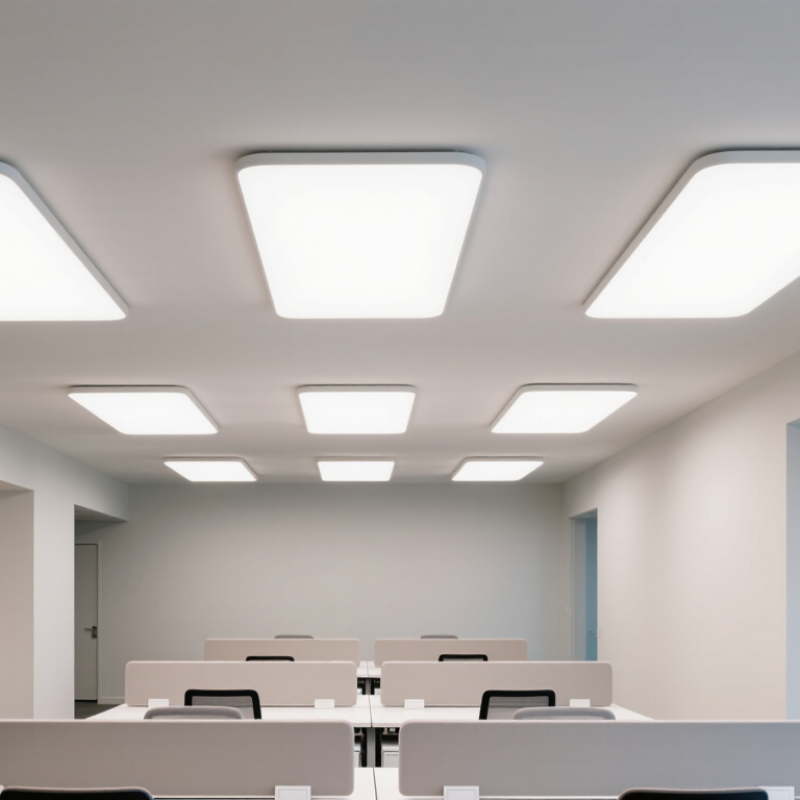
What LED Ceiling Panel Lights Are
What LED Ceiling Panel Lights Are
LED ceiling panel lights are flat, wide fixtures that spread light across a broad surface. Inside, light-emitting diodes sit behind a diffuser, a translucent layer that softens bright points. The result is usually more even illumination than a small exposed bulb can provide. Many panels are square or rectangular, with slim frames that sit in a suspended ceiling or mount directly to a solid ceiling. They look simple. Their construction is not.
A panel also needs a driver, which regulates electrical power for the LEDs. Some models allow dimming or offer selectable color temperatures, from warm white to cooler daylight tones. Check that dimmers and controls are compatible; a mismatch can cause flickering or limited adjustment. Color rendering matters too. A higher color-rendering index can help clothing, food, and paint appear closer to their natural colors. Still, specifications do not tell the whole story. Room finishes and placement change how light feels.
In a home office, a panel above a desk can illuminate papers without creating a strong pool of light. In a kitchen, several evenly spaced fixtures may reduce dark patches on counters. Measure the ceiling opening and confirm the mounting method before choosing a panel. Recessed installation needs the right ceiling structure, while surface mounting uses a frame. Installation details vary. I would not assume every panel suits every ceiling, especially where access to wiring is limited.
| Dimension | Typical Details | Why It Matters | Useful Note |
|---|---|---|---|
| What they are | Flat, rectangular or square light fixtures that use light-emitting diodes (LEDs) to illuminate a broad diffuser or light-guiding surface. | The wide, even-looking lit area is suited to general room illumination. | Panels are commonly designed for suspended ceilings, surface mounting, or recessed installation. |
| Common formats | Popular nominal sizes include 600 × 600 mm and 600 × 1,200 mm; exact dimensions vary by market and ceiling system. | Choosing a format that fits the ceiling layout can simplify installation and create a consistent appearance. | Check the fixture’s actual dimensions and mounting requirements before ordering. |
| Light output and power | Commercial models often provide roughly 3,000–6,000 lumens for a 600 × 600 mm panel and 4,500–9,000 lumens for a 600 × 1,200 mm panel. Power commonly varies by model and output. | Comparing lumens helps determine whether a panel can provide the required brightness; wattage alone does not show light output. | These are indicative ranges, not specifications for every product. |
| Energy efficiency | Many current commercial LED panels are rated around 100–140 lumens per watt, depending on the fixture and operating conditions. | Higher lumens per watt means more light output for each watt consumed. | Compare rated efficacy alongside light output, glare control, and other performance requirements. |
| Color temperature | Common choices include warm white (about 3,000 K), neutral white (about 4,000 K), and cool white (about 5,000–6,500 K). | Color temperature affects the perceived warmth or coolness of the light and the overall feel of a space. | Select according to the room’s use and the desired visual environment. |
| Color rendering | Color Rendering Index (CRI) is specified by the manufacturer; CRI 80 or higher is common for general commercial lighting. | A higher CRI can help colors appear more natural under the light. | Spaces where accurate color evaluation matters may require a higher specified CRI. |
| Service life | Many panels are rated for approximately 30,000–50,000 hours, with the rating and test conditions varying by model. | A long rated life can reduce how often a fixture needs replacement compared with many older lighting technologies. | Check the published lifetime rating and warranty; actual life depends on operating conditions and component quality. |
| Light distribution | Panels typically use a diffuser or optical plate to spread light across the visible face. Distribution and glare performance differ between designs. | Broad, even illumination can be helpful in offices, classrooms, and other spaces with ceiling-grid lighting. | Review photometric data and glare ratings where visual comfort is important. |
| Controls and dimming | Dimming and control options are available on some models, but compatibility depends on the driver and control system. | Compatible controls can support adjustable light levels and help match lighting to different tasks. | Confirm that the panel, driver, and dimmer or control protocol are compatible. |
| Typical applications | Offices, classrooms, healthcare facilities, retail areas, corridors, and other indoor spaces with suitable ceiling layouts. | The flat profile and broad light output make panels a practical option for many functional interiors. | Choose a model with the appropriate installation method and environmental rating for the location. |